
Pari no Amerikajin megavideo tt0043278 Free openload release date
⬇⬇⬇⬇⬇⬇⬇⬇⬇
⇪⇪⇪⇪⇪⇪⇪⇪⇪
genre: Romance
duration: 114minute
Average Rating: 7,3 / 10 Stars
writed by: Alan Jay Lerner, Alan Jay Lerner
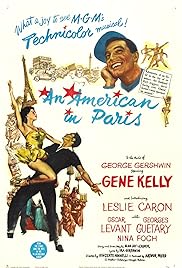
An American in Paris is a movie starring Gene Kelly, Leslie Caron, and Oscar Levant. Three friends struggle to find work in Paris. Things become more complicated when two of them fall in love with the same woman
Vezi aici An American in Paris in romana Detalii ↓ Actorii si actritele Filme similare Filme recomandate Video si Trailere Poze si Walpapere Colectia de filme Titlul original: An American in Paris An American in Paris Traducere film in romana: Un American la Paris Traducere film TMDB: An American in Paris Nota TMDB 6. 9 / 10 Total votanti: 140 Nota IMDB 7. 2 / 10 Total votanti: 24, 607 Regizor: Vincente Minnelli Vezi film online Film Un American la Paris - An American in Paris - An American in Paris - An American in Paris - 1951 in romana Film creat de companiile: Loew's, Metro-Goldwyn-Mayer (MGM) Filmul a fost creat de tarile: Descriere Film Un American la Paris - An American in Paris - An American in Paris - An American in Paris - 1951 online in romana Un american la Paris este considerat unul dintre cele mai bune 100 de filme din topul Institutului American de Film. Este un musical, o comedie, dar mai ales o poveste de dragoste. Paris. Dupa cel de-al doilea razboi mondial. Jerry Mulligan (Gene Kelly) incearca sa-si descopere vocatia de pictor in orasul tuturor artistilor. De fapt, el are certitudinea propriei valori, nefiind cu nimic vinovat de faptul ca lumea este atat de reticenta si nu doreste deloc sa se imbunatateasca, acceptandu-i opera. Asadar, in asteptarea unei recunoasteri unanime, Jerry are norocul de a fi descoperit de Milo Roberts (Nina Foch. Ea este mostenitoarea unei averi fabuloase, o femeie foarte influenta si mai mult, interesata de Jerry. Ca artist si nu numai. Totul pare ca s-a aranjat foarte bine, numai ca tanarului pictor ii pune capac o senzuala frantuzoaica: Lise Bouvier (Leslie Caron. Ea este insa logodita cu un barbat mai in varsta, iar Jerry va trebui sa o convinga ca dragostea lui este nemuritoare, dupa cum insusi spune. Un american la Paris nu inseamna numai povestea de dragoste ai carei protagonisti sunt Gene Kelly si Leslie Caron. Inseamna si muzica lui George Gershwin si capacatatea lui Gene Kelly de a-si exprima sentimentele prin dans. Pentru scena finala de balet care este de 17 minute filmarile au durat o luna si au avut un ritm foarte sustinut. Leslie Caron, care suferise de malnutritie in timpul celui de-al doilea razboi mondial, a facut eforturi sustinute pentru a tine pasul cu Gene Kelly. Vezi Film Un American la Paris - An American in Paris - An American in Paris - An American in Paris - 1951 online subtitrat in romana Poze si video film Toate imaginile si posterele Poza o poti vedea in marime naturala daca apesi pe ea Toate trailerele si video Gene Kelly Leslie Caron Oscar Levant Georges Guétary Filme asemanatoare cu Film Un American la Paris - An American in Paris - An American in Paris - An American in Paris - 1951 Comentarii: Alte denumiri ale filmului in alte limbi: Un americano en París, Argentina, Ein Amerikaner in Paris, Austria, Sinfonia de Paris, Brazil, Ein Amerikaner in Paris, Germany, En amerikaner i Paris, Denmark, Un americano en París, Spain, Pariisin lumoissa, Finland, Un Américain à Paris, France, Ενας Αμερικανός στο Παρίσι, Greece, Amerikanac u Parizu, Croatia, Egy amerikai Párizsban, Hungary, Un americano a Parigi, Italy, Pari no Amerikajin, Japan, En amerikaner i Paris, Norway, Amerykanin w Paryzu, Poland, Um Americano em Paris, Portugal, An American in Paris, Sweden, Amerikanec v Parizu, Slovenia, i, Ukraine, Sinfonía de París, Uruguay, Sinfonía de París, Venezuela, Ein Amerikaner in Paris, West Germany Poster An American in Paris Titlu IMDB An American in Paris Data lansare internationala: 1953-08-07 Locatie filmare: Metro-Goldwyn-Mayer Studios - 10202 W. Washington Blvd., Culver City, California, USA.
Download'Pari'no'Amerikajin'4Shared Pari no (2018) English Full Movie Download Pari no watch full online Watch Pari no Online Thehollywoodgossip.  [Pari no Amerikajin] Online HD 700p. Japanese Americans 日系アメリカ人(日系米国人) Nikkei Amerikajin (Nikkei Beikokujin) The Japanese American National Museum Total population 1, 411, 188 [1] 2015 United States surveys) Regions with significant populations Hawaii, the West Coast, and urban areas elsewhere. Languages American English and Japanese Religion 32% Unaffiliated, 33% Protestantism, 25% Buddhism, 4% Catholicism, 4% Shinto (2012) 2] 3] Japanese Americans ( 日系アメリカ人 Nikkei Amerikajin. are Americans who are fully or partially of Japanese descent, especially those who identify with that ancestry, along with their cultural characteristics. Japanese Americans were among the three largest Asian American ethnic communities during the 20th century, but since the 2000 census, they have declined in number to constitute the sixth largest Asian American group at around 1. 3 million, including those of mixed-race or mixed-ethnicity. [1] According to the 2010 census, the largest Japanese American communities were found in California with 272, 528, Hawaii with 185, 502, New York with 37, 780, Washington with 35, 008, Illinois with 17, 542, and Ohio with 16, 995. [4] Southern California has the largest Japanese American population in North America, and the city of Torrance holds the most dense Japanese American population in the 48 contiguous states. [5] 6] History Immigration People from Japan began migrating to the U. S. in significant numbers following the political, cultural, and social changes stemming from the Meiji Restoration in 1868. Large numbers went to Hawaii and later the West Coast. In 1907, the " Gentlemen's Agreement " between the governments of Japan and the U. ended immigration of Japanese unskilled workers, but permitted the immigration of businessmen, students and spouses of Japanese immigrants already in the U. S... The Immigration Act of 1924 banned the immigration of nearly all Japanese. The ban on immigration produced unusually well-defined generational groups within the Japanese American community. Original immigrants belonged to an immigrant generation, the Issei, and their US-born children to the Nisei Japanese American -generation. The Issei comprised exclusively those who had immigrated before 1924. Because no new immigrants were permitted, all Japanese Americans born after 1924 were—by definition—born in the US. This generation, the Nisei, became a distinct cohort from the Issei generation in terms of age, citizenship, and English-language ability, in addition to the usual generational differences. Institutional and interpersonal racism led many of the Nisei to marry other Nisei, resulting in a third distinct generation of Japanese Americans, the Sansei. Significant Japanese immigration did not occur again until the Immigration and Nationality Act of 1965 ended 40 years of bans against immigration from Japan and other countries. The Naturalization Act of 1790 restricted naturalized U. citizenship to "free white persons" which excluded the Issei from citizenship. As a result, the Issei were unable to vote and faced additional restrictions such as the inability to own land under many state laws. Japanese Americans were parties in several important Supreme Court decisions, including Ozawa v. United States (1922) and Korematsu v. United States (1943. The Korematsu case originated the " strict scrutiny " standard, which is applied, with great controversy, in government considerations of race since the 1989 Adarand Constructors v. Peña decision. In recent years, immigration from Japan has been more like that from Western Europe. The numbers involve on average 5 to 10 thousand per year, and is similar to the amount of immigration to the US from Germany. This is in stark contrast to the rest of Asia, where family reunification is the primary impetus for immigration. Japanese Americans also have the oldest demographic structure of any non-European ethnic group in the US. Internment During World War II, an estimated 120, 000 Japanese Americans and Japanese nationals or citizens residing on the West Coast of the United States were forcibly interned in ten different camps across the western interior of the country. The internments were based on the race or ancestry rather than activities of the interned. Families, including children, were interned together. Decades later, the Civil Liberties Act of 1988 officially acknowledged the "fundamental violations of the basic civil liberties and constitutional rights" of the internment. [7] Many Japanese-Americans consider the term internment camp a euphemism and prefer to refer to the forced relocation of Japanese-Americans as imprisonment in concentration camps. [8] Webster's New World Fourth College Edition defines a concentration camp as, A prison camp in which political dissidents, members of minority ethnic groups, etc. are confined. " Cultural profile Generations The nomenclature for each of their generations who are citizens or long-term residents of countries other than Japan, used by Japanese Americans and other nationals of Japanese descent are explained here; they are formed by combining one of the Japanese numbers corresponding to the generation with the Japanese word for generation ( sei 世. The Japanese American communities have themselves distinguished their members with terms like Issei, Nisei, and Sansei, which describe the first, second, and third generations of immigrants. The fourth generation is called Yonsei (四世) and the fifth is called Gosei (五世. The term Nikkei (日系) encompasses Japanese immigrants in all countries and of all generations. Generation Summary Issei (一世) The generation of people born in Japan who later immigrated to another country. Nisei (二世) The generation of people born in North America, Latin America, Hawaii, or any country outside Japan either to at least one Issei or one non-immigrant Japanese parent. Sansei (三世) The generation of people born in North America, Latin America, Hawaii, or any country outside Japan to at least one Nisei parent. Yonsei (四世) The generation of people born in North America, Latin America, Hawaii, or any country outside Japan to at least one Sansei parent. Gosei (五世) The generation of people born in North America, Latin America, Hawaii, or any country outside Japan to at least one Yonsei parent. The kanreki (還暦) a pre-modern Japanese rite of passage to old age at 60, is now being celebrated by increasing numbers of Japanese American Nisei. Rituals are enactments of shared meanings, norms, and values; and this traditional Japanese rite of passage highlights a collective response among the Nisei to the conventional dilemmas of growing older. [9] Issei and many nisei speak Japanese in addition to English as a second language. In general, later generations of Japanese Americans speak English as their first language, though some do learn Japanese later as a second language. In Hawaii however, where Nikkei are about one-fifth of the whole population, Japanese is a major language, spoken and studied by many of the state's residents across ethnicities. citation needed] It is taught in private Japanese language schools as early as the second grade. As a courtesy to the large number of Japanese tourists (from Japan) Japanese subtexts are provided on place signs, public transportation, and civic facilities. The Hawaii media market has a few locally produced Japanese language newspapers and magazines, although these are on the verge of dying out, due to a lack of interest on the part of the local (Hawaii-born) Japanese population. Stores that cater to the tourist industry often have Japanese-speaking personnel. To show their allegiance to the US, many nisei and sansei intentionally avoided learning Japanese. But as many of the later generations find their identities in both Japan and America or American society broadens its definition of cultural identity, studying Japanese is becoming more popular than it once was. citation needed] Education Japanese American culture places great value on education and culture. Across generations, children are often instilled with a strong desire to enter the rigors of higher education. Because of such widespread ambition among members of the Japanese American community, math and reading scores on the SAT and ACT may often exceed the national averages. Japanese Americans have the largest showing of any ethnic group in nationwide Advanced Placement testing each year. citation needed] A large majority of Japanese Americans obtain post-secondary degrees. Japanese Americans often face the " model minority " stereotype that they are dominant in math- and science-related fields in colleges and universities across the United States. In reality, however, there is an equal distribution of Japanese Americans between the arts and humanities and the sciences. citation needed] Although their numbers have declined slightly in recent years, Japanese Americans are still a prominent presence in Ivy League schools, the top University of California campuses including UC Berkeley and UCLA, and other elite universities. citation needed] The 2000 census reported that 40. 8% of Japanese Americans held a college degree. [10] Schools for Japanese Americans and Japanese nationals File:20140314 A Japanese school opened in Hawaii in 1893 and other Japanese schools for temporary settlers in North America followed. [11] In the years prior to World War II, many second generation Japanese American attended the American school by day and the Japanese school in the evening to keep up their Japanese skill as well as English. Other first generation Japanese American parents were worried that their child might go through the same discrimination when going to school so they gave them the choice to either go back to Japan to be educated, or to stay in America with their parents and study both languages. [12. page needed] Anti-Japanese sentiment during World War I resulted in public efforts to close Japanese-language schools. The 1927 Supreme Court case Farrington v. Tokushige protected the Japanese American community's right to have Japanese language private institutions. During the internment of Japanese Americans in World War II many Japanese schools were closed. After the war many Japanese schools reopened. [13] There are primary school-junior high school Japanese international schools within the United States. Some are classified as nihonjin gakkō or Japanese international schools operated by Japanese associations, 14] and some are classified as Shiritsu zaigai kyōiku shisetsu ( 私立在外教育施設) or overseas branches of Japanese private schools. [15] They are: Seigakuin Atlanta International School, Chicago Futabakai Japanese School, Japanese School of Guam, Nishiyamato Academy of California near Los Angeles, Japanese School of New Jersey, and New York Japanese School. A boarding senior high school, Keio Academy of New York, is near New York City. It is a Shiritsu zaigai kyōiku shisetsu. [15] There are also supplementary Japanese educational institutions ( hoshū jugyō kō) that hold Japanese classes on weekends. They are located in several US cities. [16] The supplementary schools target Japanese nationals and second-generation Japanese Americans living in the United States. There are also Japanese heritage schools for third generation and beyond Japanese Americans. [17] Rachel Endo of Hamline University, 18] the author of "Realities, Rewards, and Risks of Heritage-Language Education: Perspectives from Japanese Immigrant Parents in a Midwestern Community. wrote that the heritage schools "generally emphasize learning about Japanese American historical experiences and Japanese culture in more loosely defined terms. 19] Tennessee Meiji Gakuin High School and International Bilingual School were full-time Japanese schools that were formerly in existence. Intermarriage Before the 1960s, the trend of Japanese Americans marrying partners outside their racial or ethnic group was generally low, as well a great many traditional Issei parents encouraged Nisei to marry only within their ethnic/cultural group. Arrangements to purchase and invite picture brides from Japan to relocate and marry Issei or Nisei males was commonplace. citation needed] In California and other western states until the end of World War II, there were attempts to make it illegal for Japanese and other Asian Americans to marry European Americans, but those laws were declared unconstitutional by the U. Supreme Court, like the anti- miscegenation laws which prevented European Americans from marrying African Americans in the 1960s. According to a 1990 statistical survey by the Japan Society of America, the Sansei or third generations have an estimated 20 to 30 percent out-of-group marriage, while the 4th generation or Yonsei approaches nearly 50 percent. During the World War II Internment era, the U. Executive Order 9066 had an inclusion of orphaned infants with "one drop of Japanese blood" as explained in a letter by one official) or the order stated anyone at least one-sixteenth Japanese (descended from any intermarriage) lends credence to the argument that the measures were racially motivated, rather than a military necessity. There were sizable numbers of Korean-Japanese, Chinese-Japanese, Filipino-Japanese, Mexican-Japanese, Native Hawaiian-Japanese and Cherokee-Japanese in California according to the 1940 U. Census who were eligible for internment as "Japanese" to indicate the first stage of widespread intermarriage of Japanese Americans, including those who passed as "white" or half-Asian/European. Japanese Americans practice a wide range of religions, including Mahayana Buddhism ( Jōdo Shinshū, Jōdo-shū, Nichiren, Shingon, and Zen forms being most prominent) their majority faith, Shinto, and Christianity. In many ways, due to the longstanding nature of Buddhist and Shinto practices in Japanese society, many of the cultural values and traditions commonly associated with Japanese tradition have been strongly influenced by these religious forms. A large number of the Japanese American community continue to practice Buddhism in some form, and a number of community traditions and festivals continue to center around Buddhist institutions. For example, one of the most popular community festivals is the annual Obon Festival, which occurs in the summer, and provides an opportunity to reconnect with their customs and traditions and to pass these traditions and customs to the young. These kinds of festivals are mostly popular in communities with large populations of Japanese Americans, such as Southern California and Hawaii. It should be noted however, that a reasonable number of Japanese people both in and out of Japan are secular, as Shinto and Buddhism are most often practiced by rituals such as marriages or funerals, and not through faithful worship, as defines religion for many Americans. Many Japanese Americans practice Christianity. Among mainline denominations the Presbyterians have long been active. The First Japanese Presbyterian Church of San Francisco opened in 1885. [20] There is also the Japanese Evangelical Missionary Society (JEMS) formed in the 1950s. It operates Asian American Christian Fellowships (AACF) programs on university campuses, especially in California. [21] The Japanese language ministries are fondly known as "Nichigo" in Japanese American Christian communities. The newest trend includes Asian American members who do not have a Japanese heritage. [22] Celebrations An important annual festival for Japanese Americans is the Obon Festival, which happens in July or August of each year. Across the country, Japanese Americans gather on fair grounds, churches and large civic parking lots and commemorate the memory of their ancestors and their families through folk dances and food. Carnival booths are usually set up so Japanese American children have the opportunity to play together. Japanese American celebrations tend to be more sectarian in nature and focus on the community-sharing aspects. Major celebrations in the United States Date Name Region January 1 Shōgatsu New Year's Celebration Nationwide February Japanese Heritage Fair Honolulu, HI February to March Cherry Blossom Festival March 3 Hinamatsuri (Girls' Day) Hawaii March Honolulu Festival Hawai ʻ i International Taiko Festival International Cherry Blossom Festival Macon, GA March to April National Cherry Blossom Festival Washington, DC April Northern California Cherry Blossom Festival San Francisco, CA Pasadena Cherry Blossom Festival Pasadena, CA Seattle Cherry Blossom Festival Seattle, WA May 5 Tango no Sekku (Boys' Day) May Shinnyo-En Toro-Nagashi (Memorial Day Floating Lantern Ceremony) June Pan-Pacific Festival Matsuri in Hawai ʻ i July 7 Tanabata (Star Festival) July–August Obon Festival August Nihonmachi Street Fair Nisei Week Los Angeles, CA Politics Japanese Americans have shown strong support for candidates in both political parties. Shortly prior to the 2004 US presidential election, Japanese Americans narrowly favored Democrat John Kerry by a 42% to 38% margin over Republican George W. Bush. [23] In the 2008 US presidential election, the National Asian American Survey found that Japanese American favored Democrat Barack Obama by a 62% to 16% margin over Republican John McCain, while 22% were still undecided. [24] Genetics The distribution of the Y-chromosome among Japanese males is a lot different from the males of neighboring countries, such as in Taiwanese males. The Y chromosome is directly correlated to Asian populations, especially in Japanese Americans. The chromosome addition of Y Alu polymorphic element is only displayed in Japanese American men. People of Japanese descent show the highest frequency of the haplogroup O3a5. Haplogroups are groups of genetic populations that share a common ancestor, paternally or maternally. The frequency of this haplogroup is about 5% higher than its frequency in other Asian groups such as Koreans, Manchus, and other Northeast Asians. The Japanese DNA sequence consists of 24. 2% Korean, 16. 1% Okinawa, 4. 8% Uniquely Japanese, 25. 8% Chinese, 8. 1% Ainu, and 21% Unidentified. With the Ainu, there has been research that that group were descendants of the caucasian group. The Ainu people were the key to the Japanese genetic origins because researchers found an exact DNA match with the Ainu and the Jomon Japanese to conclude the Ainu rooted all the way back to the Jomon. [25] From mainland Japanese people, the MtDNA haplogroup frequencies are most occurring in the D4 haplogroup, with about 33% with the second largest frequency in the B4 haplogroup, containing about 9% and the third largest frequency in the M7a haplogroup, occurring at about 8. The rest of the other haplogroup frequencies are much smaller than D4, with frequencies ranging from about 3-5% consisting of mostly N9a, M8, and M9 haplogroups. Between the different Japanese populations, the Yayoi population has the highest haplogroup frequencies of the D4 haplogroup. The Jomon Japanese group has the highest frequency of the N9b haplogroup. In modern Japanese Americans, the highest haplogroup frequency is in the D4 haplogroup, the same as the Yayoi Japanese population. In Okinawa Japanese populations, the highest frequency of haplogroups is the D haplogroup, with the M7a haplogroup frequency directly behind. Of the Ainu Japanese population, the highest haplogroup frequency occurs in the G haplogroup, with an even distribution of frequency in the M7a and Y haplogroups. Lastly, for mainland Japanese populations, the D haplogroup presents the highest frequency. [26] 27] In Japanese Americans, the biggest components are Chinese, Korean, and Okinawan. People of Japanese descent show two pre-Yayoi ancestral Y chromosome lineages descended from Paleolithic people who had been isolated on the mainland of Japan. Studies of the mitochondrial component of Japanese American genes of haplogroup M12 shows a direct correlation of Japanese haplotypes with Tibetans. Other haplotypes that early descents of Japanese people were thought to be carried into include C-M8, which is another Y-chromosome haplotype. Also going back to the Jomon, that gene is displayed in high frequencies in people of Japanese descent. The estimated percentage of this type of gene in Japanese Americans is about 34. 7. The highest frequencies occur in Okinawans and Hokkaidos. [28] Overall, the genetic makeup of Japanese Americans show very mixed origins of genes, all due to the result of migrations of the Japanese ancestors in the past. Risk for inherited diseases Studies have looked into the risk factors that are more prone to Japanese Americans, specifically in hundreds of family generations of Nisei ( The generation of people born in North America, Latin America, Hawaii, or any country outside Japan either to at least one Issei or one non-immigrant Japanese parent) second-generation pro-bands ( A person serving as the starting point for the genetic study of a family, used in medicine and psychiatry. The risk factors for genetic diseases in Japanese Americans include coronary heart disease and diabetes. One study, called the Japanese American Community Diabetes Study that started in 1994 and went through 2003, involved the pro-bands taking part to test whether the increased risk of diabetes among Japanese Americans is due to the effects of Japanese Americans having a more westernized lifestyle due to the many differences between the United States of America and Japan. One of the main goals of the study was to create an archive of DNA samples which could be used to identify which diseases are more susceptible in Japanese Americans. Concerns with these studies of the risks of inherited diseases in Japanese Americans is that information pertaining to the genetic relationship may not be consistent with the reported biological family information given of Nisei second generation pro-bands. [29] Also, research has been put on concerning apolipoprotein E genotypes; this polymorphism has three alleles ( e2, e3, and *e4)and was determined from research because of its known association with increased cholesterol levels and risk of coronary heart disease in Japanese Americans. Specifically too, the apolipoprotein *e4 allele is linked to Alzheimers disease as well. Also, there is increased coronary heart disease in Japanese-American men with a mutation in the cholesterol ester transfer protein gene despite having increased levels of HDL. By definition, HDL are plasma high density lipoproteins that show a genetic relationship with coronary heart disease (CHD. The cholesterol ester transfer protein(CETP) helps the transfer of cholesterol esters from lipoproteins to other lipoproteins in the human body. It plays a fundamental role in the reverse transport of cholesterol to the liver, which is why a mutation in this can lead to coronary heart disease. Studies have shown that the CETP is linked to increased HDL levels. There is a very common pattern of two different cholesterol ester transfer protein gene mutations (D442G, 5. 1% intron 14G:A, 0. 5% found in about 3, 469 Japanese American men. This was based off a program called the Honolulu Heart Program. The mutations correlated with decreased CETP levels ( 35% and increased HDL cholesterol levels ( 10% for D442G. The relative risk of CHD was 1. 43 in men with mutations (P<0. 05) and after research found for CHD risk factors, the relative risk went up to 1. 55 (P=0. 02) after further adjustments for HDL levels, the relative risk went up again to 1. 68 (P=0. 008. Genetic CETP deficiency is an independent risk factor for coronary heart disease, which is due mainly to increased CHD risks in Japanese American men with the D442G mutation and lipoprotein cholesterol levels between 41 and 60 mg/dl. [30] With research and investigations, the possibility of finding “bad genes” denounces the Japanese Americans and will be associated only with Japanese American ancestry, leading to other issues the Japanese Americans had to deal with in the past such as discrimination and prejudice. [31] Japanese Americans by state This section requires expansion. (June 2013) California In the early 1900s Japanese Americans established fishing communities on Terminal Island and in San Diego. [32] By 1923, there were two thousand Japanese fishermen sailing out of Los Angeles Harbor. [33] By the 1930s, legislation was passed that attempted to limit Japanese fishermen, and due to World War II the boats owned by Japanese Americans were confiscated by the U. Navy. [34] One of the vessels owned by a Japanese American, the Alert, built in 1930, 35] became YP-264 in December 1941, 32] and was finally struck from the Naval Vessel Register in 2014. [36] The city of Torrance in Greater Los Angeles has headquarters of Japanese automakers and offices of other Japanese companies. Because of this many Japanese restaurants and other Japanese cultural offerings are in the city, and Willy Blackmore of L. A. Weekly wrote that Torrance was "essentially Japan's 48th prefecture. 37] Connecticut The Japanese School of New York is located in Greenwich, Connecticut in Greater New York City; it had formerly been located in New York City. Georgia The Seigakuin Atlanta International School is located in Peachtree Corners in Greater Atlanta. Illinois As of 2011 there is a Japanese community in Arlington Heights, near Chicago. Jay Shimotake, the president of the Mid America Japanese Club, an organization located in Arlington Heights, said "Arlington Heights is a very convenient location, and Japanese people in the business environment know it's a nice location surrounding O'Hare airport. 38] The Chicago Futabakai Japanese School is located in Arlington Heights. The Mitsuwa Marketplace, a shopping center owned by Japanese, opened around 1981. Many Japanese companies have their US headquarters in nearby Hoffman Estates and Schaumburg. [38] Michigan As of April 2013, the largest Japanese national population in Michigan is in Novi, with 2, 666 Japanese residents, and the next largest populations are respectively in Ann Arbor, West Bloomfield Township, Farmington Hills, and Battle Creek. The state has 481 Japanese employment facilities providing 35, 554 local jobs. 391 of them are in Southeast Michigan, providing 20, 816 jobs, and the 90 in other regions in the state provide 14, 738 jobs. The Japanese Direct Investment Survey of the Consulate-General of Japan, Detroit stated that over 2, 208 more Japanese residents were employed in the State of Michigan as of October 1, 2012, than had been in 2011. [39] New Jersey As of March 2011 about 2, 500 Japanese Americans combined live in Edgewater and Fort Lee; this is the largest concentration of Japanese Americans in the state. [40] The New Jersey Japanese School is located in Oakland. Virginia There are about 5, 500 Japanese Americans in Northern Virginia, representing the majority of Japanese Americans in the state and the multi-state Baltimore-Washington metropolitan area. A small, but relatively high number of Japanese Americans can be found areas surrounding the University of Virginia and Virginia Tech. Neighborhoods and communities The West Coast Hawaii: See also: Japanese in Hawaii California: Southern California: Los Angeles, includes the Little Tokyo section Anaheim and Orange County [41] Cerritos, Fullerton and adjacent cities Fontana in the Inland Empire Gardena in Los Angeles' South Bay area Long Beach, California – historic Japanese fisheries presence in Terminal Island Pasadena in the Los Angeles' San Gabriel Valley Palm Desert, the Japanese also developed the year-round agricultural industries in the Coachella Valley and Imperial Valley Sawtelle, California, in West Los Angeles Torrance in Los Angeles' South Bay area Ventura County Central Valley, California region: Bakersfield / Kern County. Fresno, 5% of county residents have Japanese ancestry Merced Stockton Butte County Sutter County San Francisco Bay Area, the main concentration of Nisei and Sansei in the 20th century: Alameda County, concentrated and historic populations in the cities of Alameda, Berkeley, Fremont, Oakland, and Hayward Contra Costa County, concentrated in Walnut Creek San Mateo County, especially Daly City and Pacifica San Jose, has one of the three remaining officially recognized Japantowns in North America Santa Clara County, concentrated in Cupertino, Palo Alto, Santa Clara, and Sunnyvale San Francisco, notably in the Japantown district, the largest Japanese community in North America [42] Santa Cruz County Monterey County, especially Salinas, California Sacramento and the neighborhoods of Florin and Walnut Grove San Diego area: La Jolla Bonsall, east of Oceanside Japanese community center in Vista in North County, one of two of its kind in Southern California San Luis Obispo Santa Barbara Washington State: Seattle area Bellevue Redmond Tacoma Puget Sound region (San Juan Islands) have Japanese fisheries for over a century Skagit Valley of Washington Yakima Valley, Washington Chehalis Valley of Washington Oregon: Portland and surrounding area Willamette Valley Idaho: Boise Area Meridian Nampa Caldwell Arizona: Phoenix Area, notably a section of Grand Avenue in Northwest Phoenix, and Maryvale Las Vegas Area, with a reference of Japanese farmers on Bonzai Slough, Arizona near Needles, California Southern Arizona, part of the "exclusion area" for Japanese internment during World War II along with the Pacific coast states Yuma County, Arizona Outside the West Coast On the East Coast of the United States, the New York metropolitan area has the highest number of Japanese Americans, followed by the Washington metropolitan area. [43] Arlington, Virginia and Alexandria, Virginia (the Northern Virginia region) Bergen County, New Jersey Boise, Idaho Boone County, Kentucky Boston, Massachusetts Cambridge, Massachusetts Chicago, Illinois and suburbs: Arlington Heights Buffalo Grove Evanston Elk Grove Heights and nearby Elk Grove Village Kane County Naperville Schaumburg Skokie Wilmette Denver, Colorado, note Sakura Square Gallup, New Mexico, in World War II the city fought to prevent the internment of its 800 Japanese residents Grand Prairie, Texas (the Dallas-Fort Worth Metroplex area) Greeley, Colorado New York City, New York, according to the Japanese Embassy of the USA, over 100, 000 persons of Japanese ancestry live in the NYC metro area, including South Shore (Long Island) and Hudson Valley; Fairfield County, Connecticut and Northern New Jersey Columbus, Ohio Novi, Michigan Philadelphia, Pennsylvania with the suburbs of Chester County Pueblo, Colorado Salem, New Jersey and Cherry Hill, New Jersey (see Delaware Valley) Seabrook Farms, New Jersey [44] Salt Lake City, Utah Notable people After the Territory of Hawai ʻ i 's statehood in 1959, Japanese American political empowerment took a step forward with the election of Daniel K. Inouye to Congress. Spark Matsunaga was elected to the U. House of Representatives in 1963, and in 1965 Patsy Mink became the first Asian American woman elected to the United States Congress. Inouye, Matsunaga, and Mink's success led to the gradual acceptance of Japanese American leadership on the national stage, culminating in the appointments of Eric Shinseki and Norman Y. Mineta, the first Japanese American military chief of staff and federal cabinet secretary, respectively. Japanese American members of the United States House of Representatives have included Daniel K. Inouye, Spark Matsunaga, Patsy Mink, Norman Mineta, Bob Matsui, Pat Saiki, Mike Honda, Doris Matsui, Mazie Hirono, Mark Takano, and Mark Takai. Japanese American members of the United States Senate have included Daniel K. Inouye, Samuel I. Hayakawa, Spark Matsunaga, and Mazie Hirono. In 2010, Inouye was sworn in as President Pro Tempore making him the highest-ranking Asian-American politician in American history. George Ariyoshi served as the Governor of Hawaiʻi from 1974 to 1986. He was the first American of Asian descent to be elected governor of a state of the United States. David Ige is the current governor of Hawaii and has served in that office since 2014. Science and technology Yoichiro Nambu, the 2008 Nobel Laureate in Physics Many Japanese Americans have also gained prominence in science and technology. In 1979, biochemist Harvey Itano became the first Japanese American elected to the United States National Academy of Sciences. Charles J. Pedersen won the 1987 Nobel Prize in Chemistry for his methods of synthesizing crown ethers. Yoichiro Nambu won the 2008 Nobel Prize in Physics for his work on quantum chromodynamics and spontaneous symmetry breaking. Shuji Nakamura won the 2014 Nobel Prize in Physics for the invention of efficient blue light-emitting diodes. Michio Kaku is a theoretical physicist specializing in string field theory, and a well-known science popularizer. Ellison Onizuka became the first Asian American astronaut and was the mission specialist aboard Challenger at the time of its explosion. Bell M. Shimada was a notable fisheries scientist of the 1950s after whom the National Oceanic and Atmospheric Administration research ship NOAAS Bell M. Shimada (R 227) and the Shimada Seamount in the Pacific Ocean were named. [45] 46] Art and literature In the arts, Minoru Yamasaki was the architect of the World Trade Center. Artist Sueo Serisawa helped establish the California Impressionist style of painting. Other influential Japanese American artists include Chiura Obata, Isamu Noguchi, Kenjiro Nomura, George Tsutakawa, George Nakashima, and Hideo Noda. Japanese American recipients of the American Book Award include Milton Murayama, Ronald Phillip Tanaka, Miné Okubo, Keiho Soga, Taisanboku Mori, Sojin Takei, Muin Ozaki, Toshio Mori, William Minoru Hohri, Karen Tei Yamashita, Sheila Hamanaka, Lawson Fusao Inada, Ronald Takaki, Kimiko Hahn, Lois-Ann Yamanaka, Ruth Ozeki, Hiroshi Kashiwagi, and Yuko Taniguchi. Hisaye Yamamoto received an American Book Award for Lifetime Achievement in 1986. Cynthia Kadohata won the Newbery Medal in 2005. Poet laureate of San Francisco Janice Mirikitani has published three volumes of poems. Lawson Fusao Inada was named poet laureate of the state of Oregon. Michi Weglyn and Ronald Takaki received Anisfield-Wolf Book Awards in 1977 and 1994 respectively. Tomie Arai 's work is part of permanent collection of Museum of Modern Art, Library of Congress, and the Museum of Chinese in the Americas. Music Classical violinist Midori Gotō is a recipient of the prestigious Avery Fisher Prize, while world-renowned violinist Anne Akiko Meyers received an Avery Fisher career grant in 1993. Juno Award -nominated classical violinist Hidetaro Suzuki was the concertmaster of the Indianapolis Symphony Orchestra from 1978 to 2005. Other notable Japanese American musicians include singer, actress and Broadway star Pat Suzuki; rapper Mike Shinoda of Linkin Park and Fort Minor; rapper Kikuo Nishi aka "KeyKool" of The Visionaries; Hiro Yamamoto, original bassist of Soundgarden; ukulele player Jake Shimabukuro; guitarist James Iha of The Smashing Pumpkins fame; singer-songwriter Rachael Yamagata; bilingual singer-songwriter Emi Meyer; and Trivium lead vocalist and rhythm guitarist Matt Heafy. Marc Okubo, guitarist of Veil of Maya, is of Japanese descent. Singer-songwriter and composer Mari Iijima is a Japanese expat currently living in the United States. J-Pop singers Hikaru Utada and Joe Inoue were both born in the United States but gained their fame in Japan. Sports Japanese Americans first made an impact in Olympic sports in the late 1940s and in the 1950s. Harold Sakata won a weightlifting silver medal in the 1948 Olympics, while Japanese Americans Tommy Kono (weightlifting) Yoshinobu Oyakawa (100-meter backstroke) and Ford Konno (1500-meter freestyle) each won gold and set Olympic records in the 1952 Olympics. Konno won another gold and silver swimming medal at the same Olympics and added a silver medal in 1956, while Kono set another Olympic weightlifting record in 1956. Also at the 1952 Olympics, Evelyn Kawamoto won two bronze medals in swimming. Several decades later, Eric Sato won gold (1988) and bronze (1992) medals in volleyball, while his sister Liane Sato won bronze in the same sport in 1992. Bryan Clay (hapa) won the decathlon gold medal in the 2008 Olympics, the silver medal in the 2004 Olympics, and was the sport's 2005 world champion. Apolo Anton Ohno (hapa) won eight Olympic medals in short-track speed skating (two gold) in 2002, 2006, and 2010, as well as a world cup championship. Brothers Kawika and Erik Shoji won bronze medals in volleyball in 2016. In figure skating, Kristi Yamaguchi, a fourth-generation Japanese American, won three national championship titles (one in singles, two in pairs) two world titles, and the 1992 Olympic Gold medal. Rena Inoue, a Japanese immigrant to America who later became a U. citizen, competed at the 2006 Olympics in pair skating for the United States. Kyoko Ina, who was born in Japan, but raised in the United States, competed for the United States in singles and pairs, and was a multiple national champion and an Olympian with two different partners. Mirai Nagasu won the 2008 U. Figure Skating Championships at the age of 14 and became the second youngest woman to ever win that title. In distance running, Miki (Michiko) Gorman won the Boston and New York City marathons twice in the 1970s. A former American record holder at the distance, she is the only woman to win both races twice, and is the only woman to win both marathons in the same year. In professional sports, Wataru Misaka broke the NBA color barrier in the 1947–48 season, when he played for the New York Knicks. Misaka also played a key role in Utah 's NCAA and NIT basketball championships in 1944 and 1947. Wally Kaname Yonamine was a professional running back for the San Francisco 49ers in 1947. Rex Walters, whose mother was Japanese, played in the NBA from 1993 to 2000. Lindsey Yamasaki was the first Asian American to play in the WNBA and finished off her NCAA career with the third-most career 3-pointers at Stanford University. Hikaru Nakamura became the youngest American ever to earn the titles of National Master (age 10) and International Grandmaster (age 15) in chess. In 2004, at the age of 16, he won the U. Chess Championship for the first time. He later won two other times. Entertainment and media 1957 Academy Award winner Miyoshi Umeki Miyoshi Umeki won the Academy Award for Best Supporting Actress in 1957. Actors Sessue Hayakawa, Mako Iwamatsu, and Pat Morita were nominated for Academy Awards in 1957, 1966, and 1984 respectively. Chris Tashima won the Academy Award for Best Live Action Short Film in 1997. Jack Soo, born Goro Suzuki. Valentine's Day and Barney Miller) George Takei ( Star Trek fame) and Pat Morita ( Happy Days and The Karate Kid) helped pioneer acting roles for Asian Americans while playing secondary roles on the small screen during the 1960s and 1970s. In 1976, Morita also starred in Mr. T and Tina, the first American sitcom centered on a person of Asian descent. Keiko Yoshida appeared on the TV show ZOOM on PBS Kids. Gregg Araki (director of independent films) is also Japanese American. Shin Koyamada had a leading role in the Warner Bros. epic movie The Last Samurai and Disney Channel movie franchise Wendy Wu: Homecoming Warrior and TV series Disney Channel Games. Masi Oka played a prominent role in the NBC series Heroes, Grant Imahara appeared on the Discovery Channel series MythBusters and Derek Mio appeared in the NBC series Day One. Japanese Americans now anchor TV newscasts in markets all over the country. Notable anchors include Tritia Toyota, Adele Arakawa, David Ono, Kent Ninomiya, Lori Matsukawa, and Rob Fukuzaki. [47] Works about Japanese Americans In 2010 TBS produced a five-part, ten-hour fictional Japanese language miniseries, Japanese Americans. This featured many of the major events and themes of the Issei and Nisei experience, including emigration, racism, picture brides, farming, pressure due to the China and Pacific wars, internment, a key character who serves in the 442nd, and the ongoing redefinition in identity of what it means to be Japanese and American. [48] See also Chicago Shimpo Day of Remembrance (Japanese Americans) Japanese American Citizens League Japanese American National Library Japanese American National Museum Japanese American service in World War II 442nd Infantry Regiment 100th Infantry Battalion Military Intelligence Service List of Japanese American Servicemen and Servicewomen in World War II Japanese Community Youth Council (San Francisco) Japanese in New York City Japanese Brazilians Japanese Peruvians Japanese Filipinos Japanese Canadians Japanese British Japanese Mexicans Model minority Nisei Baseball Research Project Pacific Movement of the Eastern World References ↑ 1. 0 1. 1 "ASIAN ALONE OR IN ANY COMBINATION BY SELECTED GROUPS: 2015. U. Census Bureau. Retrieved 15 October 2015. ↑ "Asian Americans: A Mosaic of Faiths. Pew Research Center's Religion & Public Life Project. July 19, 2012. Retrieved March 17, 2015. ↑ "Japanese Americans - Pew Forum on Religion & Public Life. templatestyles src= Module:Citation/CS1. templatestyles> ↑ Data Access and Dissemination Systems (DADS. American FactFinder - Results. templatestyles src= Module:Citation/CS1. templatestyles> ↑ "Redirect. templatestyles src= Module:Citation/CS1. templatestyles> ↑ [1] ↑ "Civil Liberties Act of 1988. Archived from the original on January 17, 2012. ↑ ↑ Doi, Mary L. "A Transformation of Ritual: The Nisei 60th Birthday. Journal of Cross-Cultural Gerontology. Vol. 6, No. 2 (April, 1991. ↑ Le, Cuong. "Socioeconomic Statistics & Semographics. Retrieved 2012-04-17. ↑ Endo, R. Hamline University. Realities, Rewards, and Risks of Heritage-Language Education: Perspectives from Japanese Immigrant Parents in a Midwestern Community. Bilingual Research Journal, 2013, Vol. 36(3) p. 278-294. CITED: p. 279. ↑ Ronald T, Takaki (1994. Issei and Nisei: The Settling of Japanese America. New York: Chelsea House. 280. ↑ " 日本人学校及び補習授業校の児童生徒在籍数等 (平成14年4月15日現在). Ministry of Education, Culture, Sports, Science and Technology. Retrieved on March 4, 2015. Includes New York, New Jersey, Chicago, and Guam ↑ 15. 0 15. 1 " 私立在外教育施設一覧. Retrieved on March 1, 2015. ↑ " 北米の補習授業校一覧(平成25年4月15日現在). Archive) Ministry of Education, Culture, Sports, Science and Technology. Retrieved on May 5, 2014. ↑ Endo, R. 281. ↑ " Endo Presents and Leads at Conference. Archive. Hamline University. April 20, 2012. Retrieved on March 4, 2015. ↑ Endo, R. 282. ↑ Brian Niiya (1993. Japanese American History: An A-To-Z Reference from 1868 to the Present. VNR AG. p. 28. ↑ Hans Joachim Hillerbrand (2004. The Encyclopedia of Protestantism. Taylor & Francis. p. 197. ↑ Robert A. Orsi (1999. Gods of the City: Religion and the American Urban Landscape. Indiana UP. p. 299. ↑ Lobe, Jim (September 16, 2004. Asian-Americans lean toward Kerry. AsiaTimes. Archived from the original on June 28, 2011 ↑ Wong, Junn, Lee, Ramakrishnan, Janelle, Jane, Taeku, S. Karthick. "Race-Based Considerations and the Obama Vote" PDF. 2008 National Asian American Survey. ↑ sdfsdflgggdl (2009-01-31) Looking for the Genetic Roots of the Japanese(2/5) retrieved 2016-12-05 ↑ "Making sense of DNA data and the origins of the Japanese. Heritage of Japan. 2009-02-27. Retrieved 2016-12-05. ↑ "Genetic structure of the Japanese and the formation of the Ainu population" PDF. templatestyles src= Module:Citation/CS1. templatestyles> ↑ "Jomon Genes Using DNA, researchers probe the genetic origins of modern Japanese. templatestyles src= Module:Citation/CS1. templatestyles> ↑ "Genetics of the Metabolic Syndrome in Japanese Americans - Full Text View. templatestyles src= Module:Citation/CS1. templatestyles> ↑ Lua error in Module:Citation/CS1/Identifiers at line 47: attempt to index field 'wikibase' a nil value. ↑ 32. 0 32. 1 Felando, August; Medina, Harold (Winter 2012. The Origins of California' High-Seas Tuna Fleet" PDF. Journal of San Diego History. San Diego History Center. 58 (1. Retrieved 6 April 2015. ↑ Western Canner and Packer. Miller Freeman Publications of California. 1922. p. 36. ↑ Andrew F. Smith (2012. American Tuna: The Rise and Fall of an Improbable Food. University of California Press. pp. 63–69. ISBN 978-0-520-26184-6. ↑ "San Diego Marine Construction, San Diego CA. Shipbuilding History. 27 June 2014. ↑ Gary P. Priolo (14 February 2014. YP-264. NavSource Naval History. ↑ Blackmore, Willy. Top 10: Japanese Noodles Shops in Torrance. L. Weekly. Retrieved on May 10, 2013. ↑ 38. 0 38. 1 Selvam, Ashok. Asian population booming in suburbs. Daily Herald ( Arlington Heights, Illinois. March 6, 2011. Retrieved on June 19, 2013. ↑ Stone, Cal (April 11, 2013. State's Japanese employees increasing. Observer & Eccentric. Detroit. Archived from the original on May 5, 2013. Retrieved May 5, 2013. ↑ Stirling, Stephen. Japanese Americans in Fort Lee, Edgewater describe frantic calls to loved ones in quake's wake. The Star-Ledger. Friday, March 11, 2011. Updated Saturday, March 12, 2011. Retrieved on June 19, 2013. ↑ June Casagrande (December 2004. Holiday Heritage. Orange Coast Magazine. 30 (12) 174–176. ↑ "Archived copy. Archived from the original on December 20, 2009. Retrieved 2011-08-10. ↑ "D. C. region's Asian population is up 60 percent since 2000, census data show. The Washington Post. ↑ Niiya, Brian (1993. Japanese American History. Japanese American National Museum (Los Angeles, Calif. VNR AG. p. 307. ISBN 0816026807. ↑ Bell Masayuki Shimada (1922-1958) ↑ "NOAA Honors Nisei with Launch of Fisheries Vessel 'Bell M. Shimada. Japanese American Veterans Association, December 2008, Volume 58, Issue 11. ↑. male Japanese-American TV anchor in Los Angeles local TV News. Retrieved 2017-02-07. ↑ "Northern California Premiere of '99 Years of Love. Rafu Shimpo. April 12, 2011 Further reading "Present-Day Immigration with Special Reference to the Japanese. Annals of the American Academy of Political and Social Science (Jan 1921) pp. 1–232 online 24 articles by experts, mostly about California Azuma, Eiichiro. A History of Oregon's Issei, 1880-1952. Oregon Historical Quarterly. Oregon Historical Society. 94, No. 4, Winter, 1993/1994., pp. 315–367. Available on JStor. DeWan, George. Learning How To Stay Japanese In America. Newsday. January 6, 1990. PART 11, Start page NOPGCIT. Hosokawa, Bill. Nisei, the Quiet Americans (1969. Inouye, Karen M., “Changing History: Competing Notions of Japanese American Experience, 1942–2006” (PhD dissertation Brown University, 2008. Dissertation Abstracts International No. DA3318331. Jacobson, Matthew Frye. (2000. Barbarian Virtues: The United States Encounters Foreign Peoples at Home and Abroad, 1876–1917. Hill and Wang, ISBN 978-0-8090-1628-0 Kase, Toyoshi. "Nisei Samurai: Culture and Agency in Three Japanese American Lives. PhD dissertation 2005. online Kikumura-Yano, Akemi, ed. "Encyclopedia of Japanese Descendants in the Americas. Walnut Creek, CA: Rowman & Littlefield Publishers, 2002. Lai, Eric, and Dennis Arguelles, eds. "The New Face of Asian Pacific America: Numbers, Diversity, and Change in the 21st century. San Francisco, CA: Asian Week, 2003. Miyakawa, Tetsuo Scott. East across the Pacific: historical & sociological studies of Japanese immigration & assimilation (ABC-CLIO, 1972. Moulin, Pierre. (1993. Samurais in Bruyeres – People of France and Japanese Americans: Incredible story Hawaii CPL Editions. ISBN 2-9599984-0-5 Moulin, Pierre. (2007. Dachau, Holocaust and US Samurais – Nisei Soldiers first in Dachau Authorhouse Editions. ISBN 978-1-4259-3801-7 Thernstrom, Stephan; Ann Orlov; Oscar Handlin (1980. Japanese. Harvard Encyclopedia of American Ethnic Groups (2 ed. Harvard University Press. pp. 561–562. ISBN 0-674-37512-2. Tsuchiya, Tomoko, “Interracial Marriages between American Soldiers and Japanese Women at the Beginning of the Cold War, ” Journal of American and Canadian Studies (Tokyo) no. 29, 2011) 59–84 "United States Census 2000. United States Census Bureau. April 2000. Retrieved 2007-03-16. In Hawaii Asato, Noriko (September 2005. Teaching Mikadoism: The Attack on Japanese Language Schools in Hawaii, California, and Washington, 1919-1927. Honolulu: University of Hawaii. Kono, Hideto; Sinoto, Kazuko (2000. Observations of the first Japanese to Land in Hawai'i" PDF. The Hawaiian Journal of History. 34: 49&ndash, 62. Kawakami, Barbara F. Japanese immigrant clothing in Hawaii, 1885-1941 (University of Hawaii Press, 1995. Morgan, William. Pacific Gibraltar: U. -Japanese Rivalry over the Annexation of Hawai'i, 1885-1898 (Naval Institute Press, 2011. Morimoto, Toyotomi (1997. Japanese Americans and Cultural Continuity: Maintaining Language through Heritage. Routledge. Nordyke, Eleanor C., and Y. Scott Matsumoto. "Japanese in Hawaii: a Historical and Demographic Perspective. 1977. online Takagi, Mariko (1987. Moral Education in Pre-War Japanese Language Schools in Hawaii. External links Wikimedia Commons has media related to [ commons:Category. property:P373} Japanese Americans. "Japanese Americans. Archive) State of California. Embassy of Japan in Washington, DC Japanese Cultural Center of Hawaii Japanese Cultural & Community Center of Northern California Japanese American Community and Cultural Center of Southern California Japanese American Historical Society Densho: The Japanese American Legacy Project Japanese American Museum of San Jose, California Japanese American Network [ permanent dead link] Japanese-American's own companies in USA Japanese American Relocation Digital Archives Online Archive of the Japanese American Relocation during World War II Photo Exhibit of Japanese American community in Florida Nikkei Federation Discover Nikkei Summary of a panel discussion on changing Japanese American identities The War: Fighting for Democracy: Japanese Americans “The War Relocation Centers of World War II: When Fear Was Stronger than Justice”, a National Park Service Teaching with Historic Places (TwHP) lesson plan U. Government interned Japanese from Latin America Short radio episode Baseball from "Lil' Yokohama" by Toshio Mori, 1941. California Legacy Project. American Life in the 20th Century in Washington State - University of Washington Digital Collections v t e Asian Americans 1, 2 Central Asian 3, 4 Mongolian Uzbek Map showing the United States in blue, and the nations where Asian Americans originate from in shades of orange East Asian Chinese Hong Kong Taiwanese Tibetan 5 Japanese Korean South Asian 3, 6 Bangladeshi Bhutanese Indian Indo-Caribbean Bengali Punjabi Tamil Nepalese Pakistani Baloch Pashtun Sri Lankan Southeast Asian Burmese Cambodian Filipino Hmong Indonesian Laotian Malaysian Mien Singaporean Thai Vietnamese Other Afro-Asian Amerasian Asian Hispanic and Latino Americans Eurasian Multiracial American Punjabi Mexican General Military Topics Arts and Entertainment Demographics Stereotypes Buddhists Christians Catholics Protestants, etc. Hindus Jainism Muslims Sikhs Notes 1 The U. Census Bureau definition of Asians refers to a person having origins in any of the original peoples of the Far East, Southeast Asia, or the Indian subcontinent. [2] 3] 2 The United States Government classified Kalmyks as Asian until 1951, when Kalmyk Americans were reclassified as White Americans. [4] 3 The U. Census Bureau considers Afghanistan a South Asian country, but does not classify Afghan Americans as Asian, 5] but as Middle Eastern American. [6] 4 The U. Census Bureau considers Mongolians and Uzbeks as Central Asians, 7] but a specific Central Asian American group similar to Middle Eastern American does not yet exist. [8] 5 The U. Census Bureau reclassifies anyone identifying as "Tibetan American" as "Chinese American. 9] 6 Bengali Americans may be classified as Bangladeshi or Indian. [10] Punjabi Americans may be classified as Indian or Pakistani. [11] Tamil Americans may be classified as Indian or Sri Lankan.
As a lifelong "Singin' in the Rain" fan, I was really quite disappointed by "An American in Paris" the first time I saw it. After seeing it a few more times, I certainly love the Gershwin score and the ballet at the end, but those are the main redeeming features. Aside from the fact that it's way too long (114 minutes) it has a cast of forgettable characters and a creaky plot that was sprouting white hair even by 1951's standards. It's hard to believe that this won the Best Picture Academy Award over "Streetcar Named Desire" and "The African Queen.
There isn't much to say about the plot: Struggling artist Jerry Mulligan (Gene Kelly) is sponsored by love and leave 'em Milo Roberts (Nina Foch. However, Jerry is in love with nubile young Parisian Lise (Leslie Caron) who's engaged to Jerry's friend Henri (Georges Guetary. Then there's cranky, aging "child prodigy" Adam (Oscar Levant) who acts as the story's. actually, I don't know why he's there.
"An American in Paris" isn't terrible, per se, it's just that it plays the notes of a movie musical, but not the music. Even when you don't compare it to "Singin' in the Rain" it just feels like there's something lacking. It has plenty going for it and you desperately want to love it, but it just falls short. Plus, I really found Jerry insufferable. He's just an opportunistic lecher who takes advantage of Milo (who he obviously dislikes) and relentlessly chases the much younger Lise (who initially dislikes him. Kelly seemed to enjoy playing decidedly unpleasant characters, but here he seems to play him a bit too well. Nina Foch does her best with a thankless part. Reserved and coldly beautiful (how did Hitchcock miss this woman. she does a good job playing the icy older woman (Kelly was older by nearly a decade, but suspend your disbelief.
Now, about Leslie Caron: she's received heaps of criticism for her extremely unsophisticated debut performance. I say give the poor girl a break. Only 19 when handpicked by Gene Kelly, Caron was a ballerina for a French company and not even interested in acting (she's said she only took the part to satisfy her mother. Also, the part of Lise is so insipid and underwritten, Barbara Stanwyck or Bette Davis couldn't make it more interesting, much less a young novice. She was a splendid dancer, and Lise's introduction scenes to the song "Embraceable You" are among the film's most charming sequences. Minnelli should have fired the make-up artist for shellacking Caron's lips with shiny red lipstick and accentuating her overbite. Caron did have lovely features such as her beautiful eyes and flawless complexion, but the make-up artist doesn't highlight them at all. Caron eventually blossomed into a fine actress in later years (check her out in "Lili. Gigi" and "The L-Shaped Room" if you don't believe me.
The musical numbers really save the film from becoming too tepid. I don't care how you feel about the Jerry/Lise romance: Love is Here to Stay" is still one of the most romantic scenes ever caught on film. And that ballet at the end! Kelly at least deserved that special Oscar for conceiving and choreographing this epic number that pays tribute to French painters and it demonstrates how tirelessly creative Gene Kelly was.
For lovely musical numbers only, check out "An American in Paris. For the whole bag of tricks (songs, plots, great characters. Singin' in the Rain" can't be beat.

 Pari no. Pages: 224 Size: 418. 88 Kb Read Download The Successful Agent: Practical Hints for the Seller of Life Insurance by William Alexander This work has been selected by scholars as being culturally important, and is part of the knowledge base of civilization as we know it. This work was reproduced from the orig artifact, and remains as true to the orig work as possible. Therefore, you will... Pages: 222 Size: 415. 14 Kb Pages: 216 Size: 403. 92 Kb Pages: 220 Size: 411. 4 Kb Pages: 208 Size: 388. 96 Kb Pages: 214 Size: 400. 18 Kb Pages: 46 Size: 86. 02 Kb Pages: 230 Size: 430. 1 Kb Pages: 288 Size: 538. 56 Kb Pages: Maggie Now by Betty Smith. out of the experiences of her own life in this rediscovered classic. In Brooklyn's unforgiving. desirous men who dominate her life. Confronted by her quarrelsome Irish immigrant... 春を抱いていた 7 by Youka Nitta. adult, comedy, drama, romance, slice of life, smut, yaoi Summary: A lighthearted romantic... Howards End by E. M. Forster. s smug English family to ruin her life. Howards End is considered by some to be Forster... Pages: 352 Size: 658. 24 Kb Cathedral by Raymond Carver. danger, excitement, mystery and possibility of life. Carver is a writer of astonishing compassion and... Truman by David McCullough. s beloved and distinguished life of Harry S. Truman is one of the greatest... Pages: 1120 Size: 2094. 4 Kb Pages: 432 Size: 807. 84 Kb Bertrand Russell: A Life by Caroline Moorehead The definitive biography of the controversial Nobel Prize-winning philosopher, mathematician, anti-war activist, and "free love" advocate. Moorehead makes use of unpublished letters and papers and many new interviews to fashion an incisive biography of... Pages: 608 Size: 1136. 96 Kb Download.
Pari no amerikaninsesi.
Japanese Phrase Lesson 1: Self Introduction – Review Notes Today we learned how to introduce ourselves in Japanese! To do this, we used three basic phrases. In addition to the phrases we already taught you, we will tell you some additional phrases that you can use to introduce yourself in Japanese. ………………………………………………………………………………... Number 1: ★ Hajimemashite is an expression which roughly translates to, “It is the first time (meeting you. ” However, to make it closer to the equivalent English expression, it is more often translated as “Nice to meet you. ” ★ Hajimemashite is usually the first step to introducing yourself in Japanese. Number 2: ★ In todays video we learned how to use this phrase to tell someone our name. Example: If your name is Sara, you can say: わたしは サラ です. Watashi wa Sara desu. “I am Sara. ” You can also leave out “Watashi wa” and just say “Sara desu. ” Japanese often leave out the topic of the sentence when it is obvious to both people. ★ This sentence form can also be used to tell someone anything about you. Just like you use “I am_ ” for many kinds of sentences in English, you can use this sentence to say many different things in Japanese. Example 1: You can use this sentence form to tell your nationality わたしは アメリカじん です. Watashi wa Amerikajin desu. “I am American. ” Example 2: You can use this sentence form to tell your age わたしは 15さい です. Watashi wa juugosai desu. “I am 15 years old. ” ★ Another phrase you can use to tell someone your name is: わたしのなまえは_____です. Watashi no namae wa. desu. “My name is. ” If your name is Sara, you can say…. わたしのなまえは サラ です. Watashi no namae wa Sara desu. “My name is Sara. ” ★ Some other ways to tell your name include: わたしは_____といいます. Watashi wa. to iimasu. わたしは_____ともうします. Watashi wa. to mōshimasu. Number 3: ★ Although we dont say this in English, this is a very common and important phrase to remember in Japanese. ★ This is usually the last phrase that Japanese people use when they introduce themselves. ★ A more casual version of yoroshiku onegaishimasu is yoroshiku. ………………………………………………………………………………... Conclusion: There are a lot of different phrases that you can use to introduce yourself in Japanese, but you dont have to remember them all. If you can remember the three phrases that we learned in todays video, then you can introduce yourself in Japanese! Self Introduction – Madoka Magica はじめまして. あけみほむらです. よろしくおねがいします. Do you want a Japanese tutor? Take Japanese Skype Lessons with Professional Japanese Teachers on! ………………………………………………………………………………...
Edit Release Dates UK 26 August 1951 (London) premiere) USA 26 September 1951 (limited) 11 November 1951 Argentina 13 December 1951 24 December 1951 Denmark 4 February 1952 Sweden 25 February 1952 Uruguay 3 April 1952 Australia 4 April 1952 France May 1952 (Cannes Film Festival) Finland 1 May 1952 Japan 2 May 1952 Netherlands 30 July 1952 Italy 6 September 1952 Portugal 3 October 1952 Philippines 7 October 1952 (Davao) Spain 23 October 1952 (Madrid) 10 November 1952 (Barcelona) premiere) West Germany 24 December 1952 Austria January 1953 Hong Kong 22 January 1953 Turkey November 1953 Hungary 17 June 1965 29 May 1968 (re-release) 26 November 1977 (re-release) 6 December 1977 (re-release) 7 May 1983 (TV premiere) 23 June 1984 (re-release) East Germany 23 March 1985 (TV premiere) 1 August 1990 Greece 5 March 2003 (DVD premiere) 23 December 2009 (re-release) 28 October 2011 (re-release) 26 December 2012 (re-release) 24 December 2014 (re-release) restored version) 5 April 2017 (re-release) restored version) Also Known As (AKA) original title) An American in Paris Un americano en París Argentina (alternative title) Sinfonía en París Ein Amerikaner in Paris Belgium (Flemish title) Een amerikaan te Parijs Belgium (French title) Un Américain à Paris Brazil Sinfonia de Paris Bulgaria (Bulgarian title) Canada (French title) Un américain à Paris Croatia Amerikanac u Parizu En amerikaner i Paris Finland (TV title) Amerikkalainen Pariisissa Pariisin lumoissa Finland (video box title) Germany Greece (transliterated title) Enas amerikanos sto Parisi Ενας Αμερικανός στο Παρίσι Egy amerikai Párizsban Un americano a Parigi Pari no Amerikajin Japan (Japanese title) 巴里のアメリカ人 Norway Poland Amerykanin w Paryżu Um Americano em Paris Slovenia Amerikanec v Parizu Soviet Union (Russian title) Spain (Catalan title) Un americà a París Sweden (TV title) En amerikan i Paris Taiwan 花都舞影 Turkey (Turkish title) Paris'te bir Amerikalı Ukraine і Sinfonía de París Venezuela Yugoslavia (Croatian title) Amerikanac u Parizu.
 / Belgium / 2018.
 I certainly have picked the wrong woman in my past. Now, I have a starters list of questions 1) Are you on any medication? 2) Do you have a career or at least a good job? 3) Do you have your own home or apartment, condo, etc, in other words, not still living with your parents, or shacking up with roommates! 4) Do you own your own decent roadworthy car? 5) Do you smoke? I'm looking for a, No I don't! Get a 5 out of 5 ! Then we off to a good start. I have dated the 0 for 5 and maybe the 2 for 5 and trust me, and it's a bad place to start any relationship.
 Download torrent highway 11. Download torrent highway 2.
  YouTube. One Media thanks for the share looks like a cool up the great work... A+A+A. Synopsis A "story inside a story. in which the first part follows a woman named Susan who receives a book manuscript from her ex-husband, a man whom she left 20 years earlier, asking for her opinion. The second element follows the actual manuscript, called "Nocturnal Animals. which revolves around a man whose family vacation turns violent and deadly. It also continues to follow the story of Susan, who finds herself recalling her first marriage and confronting some dark truths about herself. Director: Tom Ford Writer: Tom Ford (screenplay by) Austin Wright (novel) Actors.
 Wes Anderson vibes. Download torrent highway 7. Download Torrent highways. Download Torrent highway. Download torrent highway 3. This looks bad all over.
  Do adults know what teenagers actually post on social media because that isnt it lol. I know this woman. But 1M for the information.
 Omg I'm mexican and my mom shaved my head too when I was a baby, granted I have a lot of hair and it is very thick xD I never thought this was something mexican moms do lol.
 Download torrent highway 8. Anya Taylor Joy is a talented actress and should be in good movies. The teachings of the Buddha are not a philosophy. They are a path, a raft to help us get across the river of suffering. ~ Venerable Thich Nhat Hanh As a new Buddhist, you may be wondering what the Buddhist scripture contains, if there is a “Buddhist Bible”, how to “start” learning about Buddhism through the scriptures, and “what” it all means to you. This article on the scriptural canons of Buddhism (and graphics) is here to help! Affiliate Links Disclosure: As an Amazon Associate I earn from qualifying purchases ( info. The Three Scriptural Canons of Buddhism Zoom in to view the graphic, hover over image to find social media share buttons, and click the image if you wish to donate and get a printable PDF version. To view/share on Pinterest, click here. Unlike most religions, there is not a single book (like a bible) that exists for Buddhism. Nor is there a single ‘authority or ‘church for Buddhism (like how there is a Pope for the Catholic Church) where the teachings are centrally created, and disseminated. Instead, each branch (school) of Buddhism has their own ‘canon of scripture they developed, and use. What is a Scriptural Canon? While we use the word “canon” in this article and graphics for ease of communication and reference, the term ‘canon deserves some clarification upfront in its relation to Buddhism. Generally, the word “canon” implies a closed or fixed set of texts which are immutable (unchanging) and are included in a collection by a governing authority. An example of this might be the Biblical texts that are said to have first use that term, and do not include any new additions or changes. In Buddhism, we have three main collections of texts (which you will learn about in this article) which may be called a Canon, Tipiṭaka, or Tripitaka. Historically, there was never such a thing as a ‘closed canon. The Pāli canon may now be considered ‘closed, however it was being added to until centuries later after much dispute, and shifts in development and influence. More on this will be included in the last chapter of this article. In contrast, the Chinese Canon may not even be considered a ‘canon at all in the traditional sense. While it does have the texts you would see in the Pāli canon (including essentially the same sermons of the Buddha) it allowed other items to be included throughout history. This included additional commentaries, and even non-Buddhist texts. The standard edition of the Chinese Canon is the Taishō edition which has many volumes or sections, which are similar to a library or collection. Additionally, the Chinese Canon was a state sponsored project to collect and codify the information (often for various reasons such as political power, to establish the texts in order to ensure standardization, etc. Finally, the authoritative bodies of any of these canons must also be taken into context. For example, the Kings that favored the Mahāvihāra monks in the Theravāda school promoted the development of the Pāli canon in that way over that of the Abhayagiri monks. While the religious authoritative bodies may have had different degrees of influence in the canon, the authoritative bodies that created a canon may not be the same ones that speak on behalf of that Buddhist school (especially when state sponsored. This is most notable with the Chinese Canon as it was a state sponsored project. When the Chinese Canon spread to other east-Asian countries, those countries would also would have had state sponsors for the eventual translation and structure (for instance, the Korean Tripitaka Koreana was ordered re-created by King Gojong. Buddhist Schools and Their Canons The Nikayas of the Pāli Canon. Photo by Mixtribe Photo on Flickr While there have been many canons of Buddhism in the ancient past, there are only three (3) primary branches of Buddhism today, each with its own traditional canon of texts. Theravāda traditions rely on texts collected in the Pāli canon. Similarly, Mahāyāna traditions rely on iterations of the Chinese canon. Tibetan Buddhism traditions rely on iterations of the Tibetan canon. The Chinese and Tibetan canons incorporate early teachings from Pāli and Sanskrit, often as translated into their primary language. In some cases early Indic teachings from the early schools of Buddhism now exist only as translations in the Chinese and Tibetan canons, as the originals have been lost over time. The three canons relate to the three major branches of Buddhism that exist today which are Theravāda (mainly practiced in South/Southeast Asian countries) Mahāyāna (mainly practiced in East Asian countries) and Tibetan (mainly practiced in Central Asian countries. Tibetan Buddhism is generally part of Mahāyāna Buddhism because it has Mahāyāna sūtras, however it has its own canon and practices which make it distinct) South/Southeast Asian Buddhism: The Pāli Canon ( click to jump to this section of the article) is the scriptural canon of Theravāda [Buddhism] Buddhists mainly in the south and southeast Asian countries of Sri Lanka, Thailand, Burma, Cambodia, Laos. and Myanmar. When you think of Buddhism in Thailand, for instance, that is Theravāda Buddhism which uses the Pāli Canon. East-Asian Buddhism: The Chinese Canon ( click to jump to this section of the article) is the scriptural canon of Mahāyāna [Buddhism] Buddhists mainly in the east-Asian countries of China, Taiwan, Japan, Korea, and Vietnam. There are different versions of the Chinese Canon, with the modern standard edition being the Taishō, which was completed in Japan. When you think of Zen Buddhism, Pure Land Buddhism (chanting) or Buddhism practiced in Japan or China, for instance, that is Mahāyāna Buddhism which uses the Chinese Canon. While we do refer to the Chinese Canon as a “canon”, it is actually made up of various sources such as scripture and works from various Indic Buddhist schools, Chinese works, and also non-Buddhist works. We will cover this more in that section of the article. Central-Asian Buddhism: The Tibetan Canon ( click to jump to this section of the article) is the scriptural canon of Tibetan [Buddhism] Buddhists (which is a form of Mahāyāna Buddhism) mainly in the central-Asian countries of Tibet, Bhutan, the Himalayas, and Mongolia. When you think of the Dalai Lama, or the religion of Tibet, that is Tibetan Buddhism. While part of Mahāyāna Buddhism, it has its own unique differences and traditions which is why it is simply referred to as Tibetan Buddhism which uses their own canon known as the Tibetan Canon. The Tibetan Canon also features some similar thoughts we just had with the Chinese Canon. While it is called a canon, it is made up of various works, to include Theravāda and Mahāyāna, from varous Indic Buddhist schools, and even some of the Chinese Canon! While this is a simplified summary of the three canons currently in existence today, they all evolved from a long and rich history from many schools of early Buddhism, some of which we still dont fully understand or even know about (such as fragments of a Gandhāran canon which we currently identify as Mahāyāna may have been in existence as early as the Pāli canon even if it is not represented in that canon. A Short History of the Buddhist Canons Young monk reading. (CC 2. 0 Photo by Abhishek Sundaram on Flickr) While this may seem strange that each branch/school of Buddhism has their own canons, it is similar to how each city or town may have their own library or school. That city or town, for instance, decided on what books makes it into their library or school. And like most libraries or schools, you are likely to find a lot of the same things in a country. For instance, they may all have a standardized history books (which we can correlate to the “sūtras” in the Buddhist canons) a copy of the laws or rules of a country so they can live in peace and prosper (which we can correlate to the “vinaya” in the Buddhist canons) and books that present a scholarly analysis of certain topics and offer explanations (which we can correlate to the “abhidharma” in the Buddhist canons. That is important to understand, because all the Buddhist canons generally share a lot of the same things! The core teachings of the Buddha can be found throughout these canons. So as a new Buddhist, you should not be overly concerned about which canon is ‘best, but instead should start practicing and learning from your teacher/temple. Early Efforts to Create a Scriptural Canon According to Ven. Thich Nhat Hanh, the first attempt to develop a standardized scripture of the Buddhas teachings actually began when the Buddha was alive. One day in Jetavana Monastery, Monks Yamelu and Tekula asked the Buddha if they could translate his teachings into the classical Vedic language (which would have meant it would have been really only meant for monastics and scholars. The Buddha, however, wanted his teachings to be for everyone and did not approve using that language. Note: T he Buddhas original language ( Magadhi Prakrit) is now a ‘dead language and is no longer used by any culture. Although the canons of early Buddhist schools were written in either Pāli or Sansrkit, the Buddha did not speak either of those languages. Sanskrit was the classical language used in India at that time, and was the language of many of the canons. The Theravāda school used Pāli, as a new language to be used for their canon. While both were similar in some ways to the Buddhas original language, they are not exact, but became liturgical languages in Buddhism. After the Buddhas Death: The Councils After the Buddhas death (and Parinirvana) the monastics started a series of “Councils” in order to remember, and organize, the Buddhas teachings and rules. These councils are believed to have helped formed the early understanding, and structure, of Buddhist scripture. Originally this was done in the oral tradition, then in the written tradition. Yet, new understanding (and debate) about the scripture and its relation to the councils is showing that it had a much more dynamic evolution than just coming from one single “root”. Third Buddhist Council. By Photo Dharma from Penang, Malaysia – 014 King Asoka at the Third Council, CC BY 2. 0, Link The Split in the Monastic Community According to Ven. Thich Nhat Hanh, in 375 BCE, after the Second Council, and before the Third Council, the community of bhikkhus (monastics) divided itself into two schools: Sthaviravāda (Sthavira / conservative) and the Mahasanghika (promoted development and reform) which were more numerous ( learn more here. From these two schools branched off many other schools. It is believed that up to ( according to André Bareau) 33 different schools (called Nikāyas) developed due to the monastics differing on philosophical topics. Of those many schools, only one early Buddhist school remains today in its current form which is Theravāda. However, the Chinese Canon included some texts from some of the Tripitakas that were developed by these early schools (and thus preserved different teachings from these early Buddhist schools that may have not made it into the Pāli Canon, and possibly from the Mahasanghika school. The early Buddhist schools in India. By Avantiputra7 – Own work, CC BY-SA 3. 0, Spread of the Teachings Monastics from these early schools of Buddhism in India had made their way into China and Tibet (and vice versa) bringing the teachings, and the scriptural canons, with them which helped form the Buddhism found in central and eastern-Asia. Spread of the Buddhist Teachings. CC work by Gunawan Kartapranata on Wikimedia Why Are There Three Buddhist Canons? So why do we have three different canons of Buddhist scripture? The short answer is that after the Buddhas death, there has been different interpretations and discussions about his teachings, and rules. The three canons we have today relate to the three main schools/branches of Buddhism that currently exist, and their understanding and practice of the Buddhas teachings. Each schools has different interpretations, understanding, and practices of the Buddhas teachings. While the essential ‘core of the Buddhas teachings remain, there was dynamic and evolving understanding of the Buddhas teachings which resulted in many scriptural canons in the past. The period where the Buddha was alive and teaching can best be described as “ original Buddhism ” (although this term is often used with ‘early Buddhism as well. After the Buddha passed, and the monastic community took over, we tend to call this period “ early Buddhism ” or “ Pre-Sectarian Buddhism “. This form of Buddhism still remained true to the Buddhas original teachings and practice, however there was (even immediately after the Buddhas death) debate, confusion, and interpretation about the Buddhas teachings. Since he was no longer around to clear things up, it was up to the monastic communitys intellectual and elder monastics to figure things out and move forward. Early Buddhism continued for centuries after the Buddhas death, and eventually encompassed many different schools. Each school maintained their own scripture, however they all generally stemmed from the original Buddhas teachings albeit with different understanding, interpretation, translations, and practices. However, due to the lack of written scripture to the time of the Buddha, and there being no ‘holy grail of an original canon, there is no way to establish that any of the scripture are exactly what the Buddha said. However, it is generally believed that the core meaning and the teachings themselves remain preserved and transmitted exists in the canons we have today, even if they may not be literally what the Buddha said. Before there was the written Buddhist Canons (Scripture) that we have today, it was recited orally by monastics and was not always organized in a structured or standardized way among all the schools. Eventually, the oral tradition was largely abandoned and a desire to commit the teachings to writings was started by the monastic community. This was due to famine, external conflict, and other issues which threatened the monastic community and the continued existence of the teachings. The early Buddhist schools that existed in ancient India, and other countries (such as where the modern day countries of Afghanistan, Pakistan, etc., exist) no longer exist due to war/conflict, destruction, economics, politics, and changing belief structures of those areas. Theravādas Pāli Canon is the only canon of an early Buddhist school which remains with that same school. However, some of the scriptures of several of the canons of the other early Buddhism schools had already found their way to Chinese Canon, and Tibetan Canon, and thus preserved (while not being a complete edition of those schools separate canons. So, we have three (3) canons of Buddhism because these are the three major schools of Buddhism in existence today. Like the early schools of Buddhism which had their own separate canons, so do the Buddhist schools of our modern time. Which Canon Do I Read? Young monk reading Buddhist scripture (Image purchased for this website / Photo by vectorx2263 / So what does this mean to you, the Buddhist layperson? What canon does your practice fall under? What do you read? The answer is both simple, and complicated: For those who live in Asian countries, whatever is the main branch/school of Buddhism is practiced, they will use the canon of that form of Buddhism. Generally, “case closed”, with few exceptions. When you attend services and listen to a monk, read or chant, you are using the canon from your school of Buddhism which (typically) is the primary school in your country. For those in the Western countries, where Buddhism is not the main religion, the answer is more complex. There are often numerous temples and organizations that exist for each school of Buddhism, and from the country which they originated in. Even with Theravāda Buddhism (which does not have the diversity of Mahāyāna) each country that follows “Theravāda” may have different traditions, culture, and even decisions on which parts of the monastic rules (Vinaya) they follow, or how they partake in Buddhist holidays/celebrations/events. You will likely attend services at a temple or organization that originates from an Asian country, and the Buddhism practiced there. In that case, whatever teachings you are presented will be from that specific canon/school of Buddhism. However many western Buddhists are either starting off on their own, or are more willing to explore the breadth of Buddhist scripture that exists. And in that case, sectarian Buddhism becomes blurred. You may have already read the Dhammapada, which is part of the Pāli Canon of Theravāda Buddhism. But did you know there is also a version in the Chinese Canon of Mahāyāna Buddhism? In this instance, most western Mahāyāna Buddhists would read the Pāli Canons Dhammapada since it is more widely translated into English (and thats OK. As a non-monastic (a layperson) you are unlikely to read an entire Buddhist canon (and especially not one as enormous as the Chinese Canon. Instead, you will often be reading, or reciting, parts of the Sutta/Sūtra (sermons of the Buddha) learning from your teacher (who understands the teachings through the Abhidhamma/Abhidharma) and applying ethical conduct and practice in a form laypersons use which has their roots in the Vinaya (such as the Five Precepts, or when attending a short term retreat for laypersons at a temple where you follow monastic code. To give you an example, you are unlikely to find a Buddhist layperson in the Asian countries who have read an entire Buddhist canon. Instead, they focus on certain scriptures which are recited, chanted, or focused on within their school. You will learn in this article that the Buddhist scripture between the canons are similar in doctrine, because early Buddhist teachings ( EBT) helped to form the many canons of the different schools of early Buddhism that existed in ancient India (33 schools, according to André Bareau. There may be different translations, interpretations, and commentaries, however the ‘core of Buddhism remains central to all of them. The path each one takes for its practitioners is the main difference. Pāli Canon (Theravāda Buddhism) The Pāḷi Canon is the canon of Buddhism used primarily in the South and Southeast Asian countries of Thailand, Sri Lanka, Myanmar, Laos, and Cambodia. The Pāli Canon (Tipiṭaka) contains early Buddhist teachings which were originally written down from the verbal tradition on long, narrow palm leaves in Sri Lanka. The name “Tipiṭaka” means “three baskets” and consists of up to 50 volumes. There actually were originally “three baskets” that Buddhist monks used to collect and categorize the transcribed scripture that were put on leaves hundreds of years after his death. This canon is the product of just one of the schools of early Buddhism (Theravāda) with some of the others finding their way into the Chinese and Tibetan canons. Interestingly, Steven Collins stated that there was an older versions of the Theravāda school which does not directly connect to the Theravāda we know of today (such as the pre-Aśoka[Ashoka] period, Aśoka period, and modern period. Therefore, what we know of the Pāli Canon may relate more to the modern version of Theravāda. Today, the Pāli Canon is generally considered a ‘closed canon, meaning no new works are added to it (unlike the Chinese canon, for instance. However, historically the Pāli Canon was not a ‘written down once and done thing. According to Ven. Walpola Rāhula: “Although there is evidence to prove the growth of the Pali Scriptures during the early centuries of Buddhism in India and Celyon, there is no reason to doubt that their growth was arrested and the text was finally fixed in the 5th century A. C. when the Sinhalese Commentaries on the Tipitaka were translated into Pali by Buddhaghosa. ” Structure of the Canon The Pāli Tipiṭaka is made up of these ‘three baskets of scripture (this same structure can also be largely found in the Chinese Canon) Vinaya Pitaka (Discipline Basket. The Vinaya contains the regulatory framework (precepts, rules, discipline, ordination, rituals, etiquette and manners, training, etc. followed by monks and nuns in a monastic community (saṅgha. Sutta Pitaka (Nikāyas/Sayings Basket. The Nikāyas are the historical discourses of the Buddha. The most well known part of this collection is the Dhammapada, which is located in the Khuddaka Nikāya. Abhidhamma Pitaka. The analysis, commentary, and summaries of the Suttas (teachings of the Buddha) are contained in the Abhidhamma Piṭaka. This commentary is important to help monastics, and laypersons, in understanding and applying the Suttas in their practice. Numerous commentaries and sub-commentaries were written by Pāli scholars. For example, according to Professor T H Barret the works of 5th-century scholar Buddhaghoṣa have been essential for the understanding of Theravāda Buddhist scriptures. An Abhidhamma commentary commissioned in 1916. (Source: British Library) The Nikāyas (Sutta) The Nikāyas, which is also used to describe the Sutta Pitaka, contains the following: Dīgha Nikāya (dīghanikāya) There are 34 “long” discourses in this Nikāya, to include the Greater Discourse on the Foundations of Mindfulness (Satipatthana Sutta) The Fruits of the Contemplative Life, and the Buddhas Last Days. Majjhima Nikāya: There are 152 “middle-length” discourses in this Nikāya to include the Shorter Exposition of Kamma, Mindfulness of Breathing, and the Mindfulness of the Body. Saṃyutta Nikāya: There are between 2, 889 to 7, 762 shorter Suttas in this Nikāya, known as the “connected” discourses. Aṅguttara Nikāya: The teachings in this Nikāya are arranged numerically, which gives its title as the “numerical” discourses. There are 9, 565 short Suttas grouped by the number “ones” to “elevens”. Khuddaka Nikāya: This Nikāya contains a mixture of Suttas, known as the “minor collection”, by the Buddha or his disciplies. There are between 15 to 18 sections between the different editions. It contains the Dhammapada, which is perhaps the most well known of the entire Pāli Canon by laypersons. The sections include: Khuddakapatha, Dhammapada, Udana, Itivuttaka, Suttanipata, Vimanavatthu, Petavatthu, Theragatha, Therigatha, Jataka tales [birth stories] Niddesa, Patisambhidamagga, Apadana, Buddhavamsa, Cariyapitaka, Nettipakarana or Netti, Petakopadesa, and Milinda Panha. An example of the Jātaka tales (this one of the Suvannasāma) in illustrated format. (Source: British Library) Theravāda Suttas for Beginners For the individual who is new to Theravāda Buddhism, it can be difficult to know where to begin with the scripture. These three Suttas are considered essential reading by most Theravāda Buddhists. They cover fundamental teachings of the Buddha which are the core of Buddhist practice (clicking these links will take you to the great Theravāda scripture website known as Access to Insight) “ Setting the Wheel of Dhamma in Motion ” ( Dhammacakkappavattana Sutta) “ The Discourse of the Not-Self Characteristic ” ( Anatta-lakkhana Sutta) “ The Fire Sermon ” ( Ādittapariyāya Sutta) Additional Suttas that will help the new Buddhist with core teachings and concepts: Sigalovada Sutta: The Buddha provides instructions for laypersons. Anapānasati Sutta: This Sutta covers the basics on breath meditation. Maha-Satipatthana Sutta: This Sutta covers the basics on mindfulness. Sabbasava Sutta: Overcoming external influences that pollute the mind. Ambalatthika-rahulovada Sutta: Teaching on Virtue. Samadhanga Sutta: Teaching on Concentration. Dhatu-vibhanga Sutta: Teaching on Wisdom. Karaniya Metta Suta: The practice of loving kindness. The History of the Pāli Canon A portion of the Burmese-Pali Tripitaka ( cc0 Wikimedia) During the First Council that occurred three to four months after the Buddhas death, 500 senior monks (who were Arhats) met. Ānanda (the attendant of the Buddha) was the one who was tasked with specifying the correct teachings/sermons of the Buddha (Sūtra/Sutta. Another monk, Upali, took on the other task of setting the rules of discipline for the monastics (Sangha) which is the Vinaya. He was also the one, along with his pupils, who began the process of remembering and reciting the teachings. This began the long oral recitation tradition of the Buddhas teachings. While we are dependent on the written word today, oral recitation of teachings was an art in the ancient world and an important role. Practices such as chanting also helped monastics to remember scripture (and also for modern day monastics and laypersons. The Second Council occurred 100 years later with 700 monastic Arhats attending, and was primarily focused on the Vinaya (rules of the monastics. Around 244 BCE the Third Council occurred with about a thousand Buddhist monks met for several months to debate the Dharma and the precepts and clarify these things. This work resulted in a new collection of teachings. As a note, this is the time when the monastic community split. It was not until the Fourth Council, which was believed to be in 29 BCE (during the rein of King Vattagamani) that around 500 monks started to write down the teachings for the first time in Sri Lanka and was the first Pāli Canon. This was due to several reasons, but primarily due to war and famine which would, if only the verbal recitation existed, have a precarious situation to the transmission of the Buddhas teachings. The Pāli Canon is the only Canon that remains intact thanks to the stability of Sri Lanka throughout history. However, the other Tripitakas (written in Sanskrit) were in India where they were eventually all destroyed (along with the Buddhist schools) due to invasions, war, and other actions which removed Buddhism as a major religion there. However, some of the Tripitakas/scripture were brought to China by Monks and helped to form the Chinese Canon used by Mahāyāna Buddhism. The original Pāli Canon that was was written on palm leaves, is lost to history (likely due to the fragile nature of the leaves themselves. It spawned translations including into the Sanskrit language (which is the classical language of India) used by the early schools of Buddhism which formed their scripture (which included their own Tripitakas, or other collections. But this wasnt the “only” Fourth Council. There was another held in India around the first century, CE. This council was led by the ruler known as Kanishka (he ruled in the region which is modern day Pakistan and Northern India) who loved the Dharma and wanted scripture which was not different. This council had about 500 monks as well, and created their Canon (which may have been the first Sanskrit Canon. However, this council, and Canon, is not recognized by Theravāda. There was also a Fifth Council, taking place in Burma in 1871, where thousands of monks inscribed the [ Pāli] Tipiṭaka onto marble. Finally, there was a Sixth Council taking place in Rangoon in 1954 with thousands of Theravāda monks. While we may like to think of the Pāli canon as being complete, we can never really know. The original has long been lost to history (due to its fragile nature of being written on leaves) and it is always possible that some undiscovered artifacts may be found (similar to what occurred with the Gandhārī texts. Chinese Canon ( Mahāyāna Buddhism) The Chinese Canon is the canon of Buddhism used primarily in the east-Asian countries of China, Taiwan, Japan, Korea, and Vietnam. Find the Chinese Canon Online: The entire Chinese Canon (and the different versions of it) has not been completely translated to English. However, there are several translation projects related to this. BDKs Tripitaka Project has the most complete English translation of the Taishō edition with free PDF downloads / Index, and you can also refer to Lapis Luzuli Texts, SuttaCentral, and FGSs NTI Reader While Theravāda Buddhisms Pāli Canon is the scriptural canon from one of the early schools of Buddhism, this does not mean it is the only Canon that contains early Buddhist scripture and teachings. The Chinese Canon, which is used in Mahāyāna Buddhism of eastern-Asia (in China, Japan, Korea, and Vietnam) derived much of its early scripture from some of the many schools of early Buddhism that existed in India (33 schools according to André Bareau. The early schools of Buddhism in India also had their own scriptural canons which were written in Sanskrit and called Tripitakas. While there are fundamental differences between Theravāda and Mahāyāna Buddhisms understanding of the teachings and subsequent practices, much of the sermons (sayings) of the Buddha (Sūtra) are virtually identical in doctrine or story telling despite translation differences and organization in the Canons. Core concepts, such as the Noble Eightfold Path and the Four Noble Truths, are part of the Chinese Canon just like they are found in Theravādas Pāli Canon. The Chinese Canon is often called the Dazangjing (which means the ‘Great Scripture Store. The Canon may also be referred to in various ways such as the [Great] Chinese Tripitaka or East Asian Buddhist Canon. Beyond China, there are several editions (that are ultimately derived from the Chinese Canon) such as the Taishō Tripitaka (Japan) or Tripitaka Koreana (Korea. There are also other versions/editions of the Chinese Canon (beyond the Taishō edition and Tripitaka Koreana) such as the Yongle Northern Tripiṭaka (most important version in the Ming dynasty) Jiaxing Tripiṭaka (a Qing dynasty version that contained over 500 works not found in another collection) and the Qianlong Tripiṭaka (last version of the Chinese canons printed in the classical style) Compared to the Pāli Canon, this Canon is loosely canonical with the various schools in Mahāyāna Buddhism. While most schools in Mahāyāna Buddhism generally agree and acknowledge the Canon, they typically only work with parts of it. This includes selective emphasizing and/or using specific Sūtras and/or commentaries/analysis. As part of daily practice or religious services, typically Mahāyāna scriptures (Sūtra) are chanted or recited. A good way to imagine the Chinese Canon being used in Mahāyāna Buddhism is to visualize a public (or private) library in your hometown. The reader (in this case, a particular school of Mahāyāna Buddhism) selects the books they want to use on the path towards enlightenment. While the reader (once again, we are referencing a particular school of Mahāyāna Buddhism) acknowledges the “Library” and its contents as authentic, they are only checking out certain “books” to use. The “Library” is always there should the reader (such as a layperson or monastic) want to explore and learn more. While we generally use the term “Mahāyāna Buddhism” and “East-Asian Buddhism” here because all use Mahāyāna scripture in some way, it is actually more country specific. For example: Chinese Buddhism (also practiced in Taiwan) Japanese Buddhism, Korean Buddhism, and Vietnamese Buddhism. To give an example of this: Zen in Japan originated from the original Chan in China. Despite being similar, they are also different. Chinese Buddhism also incorporates two schools (Pure Land and Chan) as part of the practice, whereas in Japan they are distinct schools, and several are available. The Chinese Canon is made up of the traditional ‘three collections (Tripitaka) of scripture (this same general structure can also be found in the Pāli Canon, known as a Tipiṭaka) but also contains various other texts which are included in this large canon such as Tantras (Tantric school of Buddhism) translations and commentaries on the Āgamas and Mahāyāna scriptures (the Mahāyāna scriptures are what make the Chinese Canon a “Mahāyāna” Canon) translations of commentaries on Yogacara and Madhyamaka, Chinese commentaries on the various parts of the canon, Chinese sectarian writings, and histories and biographies. Additionally, there are encyclopedias, dictionaries, non-Buddhist doctrines, and catalogs of various Chinese Canons to round out the entire canon. However for most laypersons, they will unlikely be looking at anything other than the Sūtra (Āgamas) Mahāyāna Sūtras as part of their practice. Just like the Pāli Canon, the Chinese Canon also contains a “ Tripitaka “: Vinaya contains the regulatory framework (precepts, rules, discipline, ordination, rituals, etiquette and manners, training, etc. followed by monks and nuns in a monastic community ( saṅgha. Sūtra (Sermons of the Buddha) contain the Buddhas discourses (Āgamas) the Jātaka tales (birth stories) of the Buddha, and Mahāyāna scriptures (Sūtras. Note that the Mahāyāna Sūtras are not the same as the Āgamas. The Āgamas (historical discourses and sermons of the Buddha) are similar (but not identical) to Theravādas Sutta Pitaka (Nikāyas) in the Pāli Canon. The Mahāyāna scriptures are what make the Chinese Canon a “Mahāyāna” Canon, and are considered the most important part of the Canon to many schools/Buddhists. Abhidharma, provides analysis of the Dharma (teachings) known as the “Collection of Treatises”. Although there are some similarities, the analysis of time and matter is different than what is found in the Pāli Canons Abhidhamma. However, the Chinese Canon eventually included texts that went beyond the typical Tripitaka structure. You can read more about that below in the Taishō section of this article. The Taishō is the standard edition of the Chinese Canon that is currently being used, and contains numerous additional items (similar to a library. The Āgamas ( Sūtra) The Āgamas, which is also used to describe the portion of the Sūtra related to the discourses and sermons of the Buddha, contains the following: Note: While the Pāli Canon has five groupings of Suttas, the Chinese Canon contains four groupings of Sūtras (while maintaining the same general composition. The word/term “Agama” refers to the scripture of any of the religions coming from India and is not specific to Buddhism, or Mahāyāna. As described previously, Theravādas Pāli Canon used the term “Nikaya” when creating their Canon. Additionally, the Chinese Canon contains Mahāyāna Sūtras (which are separate from the Agamas. Dīrgha Āgama: There are 30 “long” discourses in this Āgama including the Sūtra of Preaching Travels which describes the Buddhas travels and discourses the year before his death, and the World Sūtra which explains Buddhist cosmology. (Corresponds to the Dīgha Nikāya of the Pāli Canon) Madhyama Āgama: There are 222 “middle-length” discourses in this Āgama which explain the basic doctrines of Buddhism such as the Four Noble Truths and the Noble Eightfold Path. (Corresponds to the Majjhima Nikāya of the Pāli Canon) Samyukta Āgama: There are 1, 300 “short” sūtras in this Āgama, known as the “connected” or “miscellaneous” discourses. The sūtras discuss a variety of doctrines such as Dukkha, emptiness, impermanence, non-self, and the Noble Eightfold Path. (Corresponds to the Samyutta Nikāya of the Pāli Canon) Ekottara Āgama: The numbered discourses in this Āgama are organized numerically and incrementally, which gives it the title “Increasing by One”. There are 471 short sūtras in 52 sections. The sūtras are grouped by the number “ones” to “elevens”. (Corresponds to the Anguttara Nikāya of the Pāli Canon, although there are differences) Unlike the Pāli Canons Khuddaka Nikāya, there is not a fifth Āgama for miscellaneous texts. However, texts such as the Jātaka Tales (prior lives/birth stories of the Buddha) and other texts, may be found in other sections of the canon. What About the Dhammapada? One of my personal top questions used to be “Is the Dhammapada, which is found in the Pāli Canon, in the Chinese Canon as well? ” The short answer is “yes”. The most well known and translated piece of Theravāda Buddhist scripture containing the sayings of the Buddha is the Dhammapada which is found in the Khuddaka Nikāya (note: in the Āgamas there is not a corresponding section as the scripture was grouped differently during the creation of the Canon. While other sermons of the Buddha may be lengthy in their traditional structure, the Dhammapada presents bite sized (or what I like to call “Twitter-sized”) sayings, which were likely due for the need to remember and recite them by monastics throughout the centuries. Within the Chinese Canon, Taishō edition, we can also find a version of the Dhammapada (a translated version is available from BDK by clicking here, and as part of their Buddha-Dharma book by clicking here. However, there are plenty of translated versions of the Dhammapada from Theravādas Pāli Canon in books that include commentary and are easily available. Mahāyāna Sūtras The Lotus Sūtra, known in Sanskrit as Saddharma Puṇḍarīka Sūtra or ‘Sūtra of the Lotus of the Wonderful Law, is one of the most influential scriptures of Mahāyāna Buddhism in East Asia. (Source: The British Library) There are several Mahāyāna Sūtras that are important, and widely read and chanted, in Mahāyāna Buddhism. The Mahāyāna Sūtras are what make the Chinese Canon a Mahāyāna Canon. You will likely be using some, or all, of these Sūtras more than you would anything else in your practice. This is because in the Mahāyāna tradition, these Sūtras can be said to contain the essence of all the Buddhas teachings. They can also help a practitioner to use them almost as a meditative tool through study and insight in order to gain awakening. Click the titles in the following lists to read the Sūtras. Some of the popular Sūtras in Mahāyāna are the Heart, Diamond, and Lotus Sūtras. Some sutras that influential with Chán/Zen include the Decent into Lanka ( Lankavatara) Lotus, Diamond, and Flower Garland ( Avatamsaka) Sūtras. Pure Land Buddhism: Some of the sūtras used are the Amitabha (Shorter and Longer) and Meditation sūtras. The following are just a few of the many Mahāyāna Sūtras: Amitabha [Shorter] Sukhāvatīvyūha Sūtra) The blessings and virtues of Amitabha Buddha, his Pure Land (Sukhāvatī) and rebirth. Amitabha [Longer] Sukhāvatīvyūha Sūtra) Explains cause and effect (Karma) and describes the Western Pure Land (Sukhāvatī. Brahma Net (Brahmajāla Sūtra) The Ten Major Precepts and 48 Minor Precepts for Bodhisattvas to follow on the path. Diamond (Vajracchedikā Prajñāpāramitā Sūtra) The Buddha teaches how to cut through afflictions, ignorance, delusion, or illusion through the perfection of insight and wisdom (Prajñāpāramitā. This Sūtra is about the emptiness of all phenomena, wisdom, perception, and non-attachment. It is considered an extremely important Sūtra by Chan Buddhists. The Diamond Sūtra is perhaps the most well known, and recited, among Buddhists. Flower Garland (Avataṃsaka Sūtra) Explains how reality appears to an enlightened being (such as a Bodhisattva. A compilation of teachings on topics such as: the ten stages on the Bodhisattva path, phenomena (dharmas) meditation/mind only (Vijñaptimatra) and emptiness (sunyata. Heart (Prajñāpāramitā Hṛdaya Sūtra) Through the perfection of insight and wisdom (Prajñāpāramitā) the Bodhisattva is able to see the emptiness (sunyata) of all phenomena (dharmas) known through (and as) the Five Aggregates. This is a Sūtra about wisdom (prajna. A great introduction to this Sūtra is by Barbara OBrien, and commentary can be found on Tricycle magazines website. Jewel Heap (Mahāratnakūṭa Sūtra) Collection of 49 texts of various lengths and topics such as: wisdom (prajñā) illusion (māyā) skillful means (upāya) and the Western Pure Land (Sukhāvatī. Decent into Lanka (Laṅkāvatāra Sūtra) Scriptural basis of the Yogacara and Chán/Zen schools on the doctrines of the illusionary and empty nature of all phenomena as manifestations of the mind, that consciousness is our only true reality, culminating in the Tathāgatagarbha (i. e., Buddha-nature. Lotus (Saddharmapuṇḍarīka Sūtra) Considered the sūtra of skillful means (upāya) providing a way for persons to readily achieve enlightenment, and stresses that every living being can achieve Buddhahood. As one of the smallest and most popular Mahāyāna Sūtras, it has become almost a central text in some schools such as Nichiren. Essentially, many Buddhist (schools and practitioners) consider the Lotus Sūtra the final teaching of the Buddha that contains all that is needed for enlightenment (“salvation”) where all beings can become Buddhas. It is also considered the Sūtra of “upāya” or ‘skillful / expedient means meaning it provides a way for persons to achieve enlightenment more readily. This is also one of the oldest Mahāyāna Sūtras (believed to have been completed around 200 BCE. Theravāda monastic Bhikkhu Sujato believes it may even predate Mahāyāna as it was likely worked on over a period of time and the earliest form of it was before Mahāyāna. Meditation (Amitāyurdhyāna Sūtra) Meditations and visualization of Amitabha Buddhas Western Pure Land (Sukhāvatī. Ten Stages (Daśabhūmika Sūtra) The Buddha describes the Ten Stages of Cultivation for Bodhisattvas on their path to full enlightenment and Buddhahood. Vimalakīrti (Vimalakīrti Sūtra) Teachings on the doctrines of non-duality and emptiness. It explains the illusionary nature of the world, equality of women, and the enlightenment of laypersons. This copy of the Diamond Sutra (below) is one of the worlds earliest, dated, books. (Source: British Museum) This copy of the Diamond Sutra is one of the worlds earliest, dated, books. (Source: British Museum) The Taishō Edition of the Chinese Canon While there are different editions of the Chinese Canon, the most used standardized version is the Taishō. It is an enormous collection of information, with a numbering structure and organization that does not fit into a typical “Tripitaka” structure. According to the Encyclopedia of Buddhism, the structure of the Taishō is more than just the traditional three sections that typically make up a Tripitaka. When the Taishō was being created, the different parts were made into separate ‘volumes / ‘sections / ‘divisions. The numbering structure of the Taishō may be of more importance to scholars than to everyday laypersons (who will typically only work with parts of this edition anyways. In the following simplified structure of the Taishō (this is not the actual numbering structure, but a way I organized to help me understand it) the items/texts that can be considered part of a “Tripitaka” appear in bold in the following list (I will also add which Tripitaka category in brackets before each one. Note that I am including various different sections/volumes under “Abhidharma”, however there is an actual Abhidharma ( 6 below. The early Chinese canons were in the Tripitaka structure, however as it grew (such as with the Taishō) various commentaries and analysis were included over the centuries. [Sutra] Āgamas [Sutra] Mahāyāna sutras [Sutra] Tantras [Vinaya] Vinaya texts [Abhidharma] Translations of commentaries on the Agamas and Mahāyāna scriptures [Abhidharma] Abhidharma texts (translations of various early Abhidharmas including the Sarvastivada Abhidharma from the Sarvastivadins (an early school of Buddhism) and various other parts of different Abdhidharmas from India. For comparison, the Pāḷi canon contains seven Sastras (Indian commentaries) while the Chinese Canon has a large collection from the Sarvastivada school. [Abhidharma] Translations of commentaries on Yogacara and Madhyamaka [Abhidharma] Chinese commentaries on the sutras, vinaya, and shastras (Indian commentaries) Chinese sectarian writings Histories and biographies Encyclopedias, dictionaries, non-Buddhist doctrines (Hindu, Manichean, and Nestorian Christian) and catalogs of various Chinese Canons Short History of the Chinese Canon I have intentionally left off information about the early Buddhist councils, which you can read in the Pāḷi Canon section of this article. Chinese Buddhism developed, of course, within China. So it was not one of the early Buddhist schools of India. However, it developed as a result of monastics from those early Buddhist schools in India, as well as their scriptural canons. The area that now is part of present-day Pakistan and Afghanistan was called Gandhāra, and was a base of Buddhist culture according to Professor T H Barrett. This is important because of Gandhāras proximity to China. Beginning in the 2nd century CE, these texts began to come into China (and likely other areas) and have a profound impact. These texts were in what modern linguistics call “Gandhāri”, which was a local Indian language. Over 1, 000 years and well over 500 Buddhist works were translated from other languages (such as Gandhāri and Sanskrit) into Chinese which Barrett called “one of the most extensive and protracted translation enterprises in world history”. The twenty-nine birch bark scrolls from the ancient region of Gandhāra (extending in present day northern Pakistan and Afghanistan) are among the oldest surviving Buddhist manuscripts. They are in Gāndhārī in the Kharoṣṭhī script. Gāndhārī is a language related to Sanskrit and Pāli which was used in the area from the 3rd century BCE to the 5th century CE. Written in black ink with a reed pen, the scrolls are made of sections of bark glued together to form long strips. (Source: British Library) Buddhism originally come into China originally thanks to two missionary Buddhist monks (named Dharmaratna and Kaśyapa Mātaṅga during the Han Dynasty) and subsequently by other monks such as Kumārajīva (344-413) who was regarded as a great translator of Buddhist scriptures from Sanskrit into Chinese. He was a Kuchean who understood Chinese so well, that his accuracy and readability of translating the scripture was invaluable. During the Tang Dynasty, the monk Xuanzang (602-664) left for India on a journey that ended up lasting 17 years. While in India, he was able to learn from Buddhist monks there, and collect over 600 sutras/Tripitakas written in Sanskrit which he brought back with him to China. The emperor (During the Tang Dynasty) was fully supportive and commissioned him and his team to translating the Buddhist teachings into Chinese. He continued to communicate with monastics in India throughout his life, and while mostly unknown to Westerners, his letters contains insightful and important history of how this canon came to be. Xuanzang (Public Domain) In the 10th century, the Chinese government created a translation bureau, but eventually did not have enough Chinese monks with a good knowledge of Sanskirt. Eventually, bilingual glossaries and other references were used to help with transalation and study. Regular travel between China/East Asia and India resumed in the 19th century. According to Richard H. Robinson and Willard L Johnson, The first printed edition of the Chinese Canon was in 972-983 CE was the Shu-pen or Szechuan edition, and consisted of 1, 076 texts in 480 cases. There have been several editions of the Canon since, including geographic based editions such as the Tripitaka Koreana (Korea. However the current standard edition is known as the Taishō edition (sometimes referred to as the Taishō Tripitaka. The project for the Taishō started in 1924 in Japan, and was completed in 1934. It consists of 55 volumes, containing 2, 184 texts, along with a supplement of 45 volumes. Most online versions and translated versions of the Chinese Canon are of the Taishō. As the Chinese Canon moved outside of China (and untranslated) “literacy” was defined as understanding Chinese writing. Therefore, many laypersons were “illiterate” and could not read Buddhist teachings (due to it being written in Chinese, and transmitted that way. For a long time, this was how the teachings were transmitted, and likely were accessible only by monastics and educated individuals who understood Chinese writing. This is what eventually formed the translation of the Chinese Canon in these countries (as described above) into canons such as the Tripitaka Koreana, Taishō, and others. You can see a picture of scripture using images at the bottom of this section that helped laypersons recite sutras. Copying the canonical texts by hand was the norm in East Asian Buddhism. According to Professor T H Barrett, in medieval Japan they found that portioning out this task to ten thousand people (or more) could complete the task in a single day! This was also one of the origins of practicing hand copying the scriptures in order to gain karmic merit. Eventually, printing helped the spread of Buddhism. In the 10th century the first canon was carved on woodblocks in Szechuan, China, and eventually moved to the capital to create new sets when needed. Woodblock printing also was springing up in other countries as a way to make copies of the canon without having to resort to the laborious practice of hand copying. This small, folding book contains the text of the Heart Sūtra (in Sanskrit Prajñāpāramitāhṛdaya) represented in pictures and was intended to allow illiterate people to recite this popular Buddhist sūtra. The repeated chanting of texts is an important part of Buddhist devotion and is believed to be a way of acquiring religious merit. However, to be able to read a Buddhist text written in Chinese script, which was also used in Japan and Korea, requires a knowledge of many thousands of individual characters. In earlier times, when rates of literacy were much lower, this type of illustrated sūtra – known popularly as Mekura-kyō or Monmō-kyō (literally ‘Sūtras for the Illiterate) – was a way to provide people who were unable to read with a way to gain the merit derived from chanting the texts. Mekura-kyō work on a rebus principle, whereby the sounds of the Chinese characters are represented by pictures of everyday objects that have the same pronunciation. By reading out the sounds of the images, the worshipper is able to repeat the text of the sūtra. An English example would be to represent the word ‘belief with a picture of a bee and a leaf. (Source: British Library) The Tibetan Canon (Tibetan Buddhism) The Tibetan Canon is the canon of Buddhism used in the central-Asian countries of Tibet, Bhutan, the Himalayas, and Mongolia. Photo by Ailiajameel [CC BY-SA 4. 0. This section is still under development. Send me a message if you have any feedback! In addition to the Pāli Canon and Chinese Canon, Tibetan Buddhism as their own scriptural canon. Although Tibetan Buddhism is a form of Mahāyāna, their Canon is not an edition of the Chinese Canon (although some of the Chinese Canon found its way into their canon. It was written in Tibet mostly from translations of various scripture that originated in India, to include Mahāyāna texts (although the Chinese Canon and Tibetan Canon do not always include the same Mahāyāna texts. There are two parts to this Canon (which may also be used to refer to the Tibetan Canon itself) which are the Kangyur (“Translation of the Words of the Buddha”) and Tengyur (“Translations of the Teachings”) Bka-‘gyur (Kangyur/Kanjur) contains different volumes and sections based on the edition. The Narthang version contains a Vinaya (13 volumes) Sutra (30 volumes) and 55 other volumes. There are several different versions of the Kangyr. Bstan-‘gyur (Tengyur/Tenjur) contains (in the Peking edition) 224 volumes, and 3, 626 texts. Among them are the commentaries on the Sutras and the Abhidharma. Tibetan Book of the Dead (Bardo Thodol) Although not part of the Tibetan Canon, it is perhaps the most well known (or at least the title is known by everyday people. This book explains the stages of death, specifically from the Tibetan Buddhism viewpoint, and was a very popular work that was created during the medieval period (which is why it is not in the Tibetan Canon. The Bardo Thodol explains the experiences of a person as they are dying, the moment of death, and for 49 days afterwards. Also included are practices that are to be taken after the person has died. It was originally written by Yeshe Tsogyak, the primary student of Padmasambhava, in the 8th century. Interestingly enough, the title “book of the dead” is not an accurate title, and was named this due to a Western misunderstanding. You can find more information here: The Tibetan Canon also contains Vajrayana texts. Professor TH Barrett explains: Vajrayana texts draw on the ideas of Māhāyana but present them through meditation practices and visually startling art that often seems to negate basic Buddhist values, though in fact they depend on trust in a teacher (the term guru is used) to give the true meaning of their scripture (the term used is tantra) to those who are initiated into their practices. Vajrayana is said to provide a more direct route to enlightenment, but since it is open to misunderstanding by the uninitiated it is sometimes called ‘esoteric. The volume displayed here is the result of such a project which was completed in 1712 at the south-western Tibetan monastery of Shelkar. A text accompanying the Kanjur lists the names of eighteen sponsors, ten monks from the monastery who acted as editors, six people who provided the paper, and eight calligraphers who came from Nyemo, a monastery in central Tibet whose monks were famous for their calligraphic skills. This volume contains the Fortunate Aeon Sūtra, a text which is traditionally always the first in the sūtra section of the Kanjur. (Source: British Library) Inner text of the Kanjur. (Source: British Library) Which One is the Best (or Real) Buddhist Canon? I am often asked whether the teachings and techniques of Buddhism continue to be relevant in the present day and age. Like all religions, Buddhism addresses basic human problems. So long as we continue to experience the basic human sufferings of birth, disease, old age, and death, there is no question of whether it is relevant or not. ~ His Holiness, the Fourteenth Dalai Lama I hoped you enjoyed learning more about the amazing, and extensive, world of Buddhist scripture. One of the main things I wanted to leave you with is a greater understanding of the scriptural canons of the three main schools, and how they were developed and came from the same home. We should not be thinking of which one is “better”, but how they can help us in our path towards awakening. We must also understand that the scripture is not perfect. We cant go back and ask the Buddha if he really said any of this. We instead put our faith in the monastic community who, for centuries, orally recited the scripture until the effort to write it down began. Yet, as much as Buddhist scripture is important and revered, it was the result of human efforts and we must take that into consideration. Bodhipaksa, author of the book “ I Cant Believe Its Not Buddha! ” and the website Fake Buddha Quotes (which helps dispel fake Buddha quotes spread on the internet) talked about the accuracy of Buddhist scripture in general which will relate to both canons: Theres no guarantee that any given verse in the Buddhist scriptures was actually spoken by the Buddha. There was inevitably some editing of the teachings as they were passed on by word of mouth from generation to generation, and theres also evidence of tampering by monks who were pushing particular agendas. But we can safely assume that most of the early scriptures that have been passed down do reflect the kinds of things the Buddha said, if not in his exactly words. And some — possibly a lot — may consist of pretty much exact quotes. When it comes to the (seemingly) never ending debate about the Pāli and Chinese Canons, we need to understand how they have the same common doctrine, and are both Buddhist. According to Bhikkhu Sujato (A Theravāda Thai Forrest monk) both Canons are very similar (Nikayas refer to the Suttas in the Pāli Canon, and Agamas refer to the Sturas in the Chinese Canon) It is easy to forget that, in our times, the reason why the Nikāyas carry such prestige is largely due to the discovery that they are very similar to corresponding collections of sutras found in Chinese translation. The logic is powerful: the Southern (Theravāda) school and the Northern (Chinese) schools have been separated by vast distances, with only occasional contacts over the past 2000 years. Even before that, within India herself, the schools had separated and passed down distinct versions of their canonical scriptures. Yet despite this separation, their root canonical scriptures are doctrinally almost identical. These conclusions were arrived at by the early generations of cross-cultural Buddhist scholars, both Western and Eastern. Their findings gave strong impetus to the authority of the Pali Nikāyas and Chinese Āgamas and the importance of studying these collections on comparative basis. These findings have been taken to heart in modern Buddhist studies especially in Taiwan and Japan. However in the English speaking world, the Chinese Āgamas have been comparatively neglected. This seems to be due to a number of factors, not least the practical difficulty of learning to read Chinese. In his article, he referenced some of the analysis of both Canons that have been done showing they are almost identical: These studies have largely confirmed Beals initial hypothesis – the Chinese Ᾱgamas and the Pali Nikāyas are virtually identical in doctrine. They are two varying recensions of the same set of texts. These texts – popularly referred to simply as ‘the Suttas – were assembled by the first generations of the Buddhas followers, before the period of sectarian divisions. They are pre-sectarian Buddhism. Near the end of his article, he wrote this which I think really summarizes why this is all so important (remember, the Buddhas sermons/teachings are called the Agamas in the Chinese Canon, and Nikayas in the Pāli Canon) Perhaps another reason for the relative neglect of the Āgamas is their very closeness to the Nikāyas. We have to go to a lot of effort to discover what we think we know already: the core Buddhist teachings really are the four noble truths, the eightfold path, dependent origination, and so on. Although there are occasional instructive variations, the main fruit of this study is not in the content of the teaching, but in the method. Rather than assuming that the scriptures of just one school are the first and last word on what the Buddha taught, we are searching in the root teachings shared in common between the schools. Such an approach will not only help us to get ‘back to the Buddha, but it will provide the best platform for an improved understanding between the Buddhist schools we find alive today. Additionally, Ven. Thich Nhat Hanh stated that we can benefit from these two Canons because the Southern (Theravāda) and Northern (Mahāyāna) canons were able to capture different (or additional) teachings better than the other. In this way, we have the unique benefit of being able to learn and compare both! By comparing the two extant sutra recensions, we can see which teachings must have preceded Buddhisms dividing into schools. When the sutras of both transmissions are the same, we can conclude that what they say must have been there before the division. When the recensions are different, we can surmise that one or both might be incorrect. The Northern transmission preserved some discourses better, and the Southern transmission preserved others better. That is the advantage of having two transmissions to compare. To go a little further on, and to reinforce that point, Bhikshu Kongmu said: I bring this up here mostly to make the point that, if one truly wants to understand so-called “Early Buddhism”, comparative studies between the Pali and Chinese sources (along with whatever Sanskrit fragments and Tibetan parallels) is really the most complete method for doing so. Otherwise, by solely relying upon, say, the Pali Canon, we indadvertedly get only one Early Buddhist Schools inheritance and neglect the rich sources found presently in translation or in fragments of Indian languages. One of the most common statements is that the Pāli Canon of Theravāda Buddhism is the only true scripture of Buddhism, because it is the closest to that of early Buddhism, and of the Buddhas teachings. While the Pāli Canon is the only existing canon of an early Buddhist school that contains its own works (although it is difficult to call it complete, as new Pāli may be discovered in the future) it was not the only canon. While not all of the canons of the many schools survived in any form, some did make their way into the Chinese Canon, and the Tibetan Canon. While not the ‘complete canons of those other early Buddhist schools, the doctrine between all canons generally is the same. Steven Collins wrote at the end of his article “ On the very idea of the Pali canon ” in the Journal of the Pali Text Society: “…suggests that the actual importance of what we know as the Pali Canon has not lain in the specific texts collected in that list, but rather the idea of such a collection, the idea that one lineage has the definite list of buddha-vacana. So the Pali Canon should be seen as just a ‘canon (in one sense of that word) in Pali, one amongst others. ” Thats important to note. We should not take one canon as ‘authoritative for all of Buddhism. The canons are reflective of the schools of Buddhism. Additionally, we are finding that, especially in the scholarly world, the Buddhist scripture is seen as historically not complete as new things are being discovered. Mr. Collins included in that article that there was no such thing as a ‘closed canon in the Buddhas lifetime, but that eventually did come to have the ‘sense of a closed and fixed Canon. However he noted that “Originally, then, neither p āli nor tipitaka referred to a closed canon. ”. I bring this up because we have seen the Chinese canon be a living canon that was open, rather than closed, which causes criticism that by doing so it makes it less legitimate. Again, each canon is reflective of that school of Buddhism and should be understood as such. Collins also stated that there were at least three different periods of Theravāda, so it is unclear if the canon as we know it now was what was used during that time: …we cannot know the relation between ‘the canon as we now have it and the canon as it was being transmitted at this time; still less can we know that this canon was thought of in the closed, exclusivist sense. According to Linda Heuman (referring to Professor Solomon, and the discovery of new Buddhist scripture from Gandhārī) our view that certain scripture, such as the Pāli Canon being the only true form of Buddhist scripture (or even the only earliest) is being uprooted the more we uncover about early Buddhism: As scholars scrutinized the Gandhari texts, however, they saw that history didnt work that way at all, Salomon said. It was a mistake to assume that the foundation of Buddhist textual tradition was singular, that if you followed the genealogical branches back far enough into the past they would eventually converge. Traced back in time, the genealogical branches diverged and intertwined in such complex relationships that the model of a tree broke down completely. The picture looked more like a tangled bush, he reported. Here is where I clicked Rewind: these newly found manuscripts, he declared, strike the coup de grâce to a traditional conception of Buddhisms past that has been disintegrating for decades. It is now clear that none of the existing Buddhist collections of early Indian scriptures—not the Pali, Sanskrit, Chinese, nor even the Gandhari—“can be privileged as the most authentic or original words of the Buddha. ” She also added this quote: “Nobody holds the view of an original canon anymore, ” Oskar von Hinüber, one of the worlds leading scholars of Pali, told me. This is not negating the Pāli Canon, or any canon for that matter. Instead it helps to shed light on the history of Buddhist scripture is ‘gray, to say the least. We have an unclear, and unsubstantiated, view of the history with no way to truly validate anything. However, in the conclusion part of this article I provide some explanations of others who show that the value we put in the Pāli Canon today was actually reinforced due to the Chinese Canon. Because these two groups didnt really talk to each other, they gave scholars and historians a unique and rare way to validate the most essential core of the scripture…the Buddhas teachings (Sutra/Sutta) and the monastic rules (Vinaya. “Mahāyāna” Buddhists never felt they were separate from the long line of monastics that came from the Buddhas time. They followed the Vinaya, and preserved and practiced the teachings. Even during early Buddhism, none of the many different schools felt they were a ‘separate Buddhism. They had different understandings, practice, and even regional translations/language, but that was understood to be part of the dynamic nature of Buddhism itself even during this early period. A good article to read on this is “ Whose Buddhism is Truest? ” on Tricycle. While it is centered around the discovery of new Buddhist scripture found in a region once called Gandhāra, it explains the now (more) muddied nature of what we believe to be the original origins of Buddhism. There may never have been a “single” source of scripture which has been widely believed. For the Buddhist layperson, like you and me, you will not get a black and white answer you are looking for (as explained, we will never be able to find this holy grail of an original canon that everyone agreed upon in the ancient past. And this is OK! “ Faith ” in Buddhism and Buddhist practice flows from this understanding that we cant put our hands on some document signed by the Buddha, but we can put our faith in the scripture we have now (regardless of the school of Buddhism) as containing (at least) the essence of the Buddhas teachings that leads us to liberation. This faith is supported by the monastic community who did their best to retain, recite, write down, and understand the teachings, as well as the enlightenment of monastics throughout the centuries since the Buddha left us. Further, our faith is not ‘blind faith, but is also reinforced through the fact we can actually prove the truth of these teachings ourselves. Now that we talked about the Canons, lets go back to the Mahāyāna scriptures such as the Diamond, Heart, Amitabha, etc. According to David Kalupahana (a Buddhist scholar from Sri Lanka) 2006, Mulamadhyamakakarika of Nagarjuna. Motilal Banarsidass: p. 5. those Mahāyāna scriptures can connected to early Buddhism: Scholars have noted that many key Mahāyāna ideas are closely connected to the earliest texts of Buddhism. The Mahāyāna scriptures (sutras) exist nowhere else in the Pāli Canon, so what are we to make of those? Once again commentary by Bhikkhu Sujato: So there is no doubt that the Lotus Suta and other Mahayana sutras are historically late, dating from many centuries after the Buddha. When reading them as historical documents, rather than seeing them as spoken by the Buddha, we should see them as the response and articulation by Buddhists of the past to the conditions that they were in. They were addressing matters of concern for them, asking how the Dhamma is to be applied in these situations. Of course the same is true of many Theravadin texts, although in the case of the early Suttas and Vinaya there is still a core that probably stems from the Buddha himself. We have to understand, when it comes to the Mahāyāna specific Sūtra, the spiritual and transformative value of them. The Dharma is vast, and in Mahāyāna there is said to be 84, 000 Dharma Doors in which people can be taught in a way that speaks to them. For Theravādins looking at the Mahāyāna Sūtras, there can be found early Buddhism and Buddhist thought that may not have been fully explored by Theravāda when the Pāli Canon was being formed (as well as similarities. But should the Mahāyāna sūtras be canonical if there is doubt regarding their lineage back to the Buddha? According to Professor T H Barrett explains: There are also texts like the Lotus Sūtra, whose special status is not just proclaimed by the work itself, but also acknowledged in the art and material culture of East Asia in a way that makes the use of the word ‘canonical far from inappropriate. The Buddhas word was for many, in effect, a form of the Buddhas very presence, still with us in later ages, and still to be treated with every form of respect. In looking at Buddhist books this is certainly something to bear in mind. It is also interesting that at one point certain Theravāda Buddhists read what we would now refer to as Mahāyāna texts from at least the 3rd century A. D. and possibly before. The Abhayagiri monks were, at times, more numerous in the Theravāda school than the Mahāvihāra monks. However, none of their scripture remain. Steven Collins remarked: It seems that at least from the 3rd century A. D., and perhaps before, the Abhayagiri monks used what we would now call Mahayana texts; it is revealing that this is standardly referred to by their Mahaviharin opponents as their embracing the vetulla-vada. The term vetulla, Sanskrit vaitulya or vaipulya, meaning ‘extended or ‘enlarged, refers to the great extent of certain Mahayana scriptures. Later triumphalist chronicles condemn with increasing vehemence the heresy of these unacceptable texts, and tell of repeated book-burnings by pro-Mahaviharin kings. Collins also stated that the Mahāvihārin monks eventually won out and focused on a strategy to making it a closed canon as part of “self-definition and self-legitimation”. For Mahāyānists, the Pāli Canon takes us back to one of the schools of early Buddhism and it also has a similar or identical teachings as shown in the Agamas, and may have additional teachings we can learn from. Mahāyāna teachers and schools may refer to the Pāli Canon without concern, as it flows from the same early school of Buddhism. For example, the Dhammapada, with its short verses, is easy for laypersons to read and recite, and is also why the Chinese Canons Agamas are not often translated into English because the Dhammapada essentially contains the same sermons/teachings, and there are plenty of translations. An important thing I would like to impart is that we can learn a lot from each school, and each other, to deepen our understanding of the teachings. While a beginner should follow the guidance of their teacher and school with the specified texts, as you grow you can explore both branches of Buddhism to deepen understanding and views. I will leave you with a book I recommend that contains both Theravāda Suttas and Mahāyāna Sūtras is “ Awakening the Heart” by Ven. Thich Nhat Hanh. Although he is a famous monastic of the Mahāyāna school, he covers many Pāli Canon Suttas in this book and provides the scripture in this book as a “foundation” for an individuals practice. What I especially love is that he was excited to find some of these Theravāda Suttas, which demonstrates that even those in Mahāyāna can benefit. The commentaries are especially beneficial, and can help you understand the sutta/sūtra you just read, and how to apply it to your practice. It goes to show that you can learn from both branches of Buddhism (and thus both Canons) to aid you in your practice! Article Notes Articles Main Featured Photo: Image purchased for this website by artist vectorx2263 / Thank You to everyone who helped with feedback, reviews, and other assistance (for either the entire article and graphics, or just graphics) Venerable Sanathavihari Los Angeles, Matt Orsborn, Peter Romaskewitz, Zen Priest Eunsahn Citta, Bill Teague, Reddit users: u/mindroll, u/Rks1157, u/En_lighten, and /u/Temicco, and the valuable assistance of an individual with a PhD in Religious Studies and specializes in the study of Buddhist monastic law (vinaya) who wishes to remain anonymous. Book Recommendations: Suttas and Sūtras: “Awakening the Heart” by Ven. Thich Nhat Hanh. Suttas: Bhikku Bodhis “The Teachings of the Buddha” series Overview: What the Buddha Taught (Theravāda) Overview: The Heart of the Buddhas Teachings (Mahāyāna) Further Reading: The Buddhist Scriptures on Buddhanet Translation and Transmission of the Buddhist Texts (British Library) The development of the Buddhist ‘canon (British Library) The Buddha and Buddhist sacred texts (British Library) Book: The Early Buddhist Schools About the Vinaya Beyond the Tipitaka on Access to Insight [Video] Lecture about the Chinese Canon “ Defining the Chinese Canon ” [PDF format] An essay with good historical information and explanations) The Chinese Canon on Buddhanet The Chinese Tripitaka on Chinese Buddhist Encyclopedia The Chinese Canon by Barbara OBrien The Chinese Canons on Lapis Lazus Texts Chinese Buddhist Canon on the Encyclopedia of Buddhism BDKs Website on the Tripitaka Translation Project For early Buddhist Scripture, a site called Sutta Central (a site by Sujato Bhikkhu) is a fantastic resource. Vajrayana is sometimes used to refer to Tibetan Buddhism (as those texts are contained in its canon) but some disagree with this and it will just be referred to as Tibetan Buddhism/Tibetan Canon in this article. This article is Copyright by Alan Peto. You are here: Home » Buddhism » The Buddhist Scriptures for Beginners If you enjoyed this article, please share! 🙏.
 Big time adolescence movie online. Big time adolescence. Big time adolescence streaming. Big time adolescence h264. Big time adolescence hulu trailer. Big time adolescence rotten tomatoes. Big time adolescence sundance trailer.
 Big time adolescence putlockers.
 Big time adolescence netflix. Big time adolescence movie hulu. Big time adolescence trailer legendado. Big time adolescence full movie online. Big time adolescence watch. Big time adolescence full movie free online. Big Time adolescente. Big time adolescence mgk. Big time adolescence release. Big time adolescence 123. Big time adolescence imdb. Big time adolescence hulu.
  Big time adolescence release date. Big time adolescence rating. Big time adolescence putlocker. Big time adolescence online. Big time adolescence full movie.

 When he was just homeless guy, look at him now. God gave you something beautiful and you used it on best way! Big respect James, you are awesome. Movie online amazon fire. Movie online malay. A great vlog Emma. Poor you at the end. 😟 We have the same two colours in our spare room. I love them. Not sure which brand of paint we used as we have thrown the tins out but we tend use delux. You both deserve a good holiday when your DIY venture is over. All the best x.
 Movie Online emmaus. MOVIESFIZZ! VERIFIED*CODEX. 4K-How to watch Emma FULL Movie Online Free? HQ Reddit [DVD-ENGLISH] Emma (2020) Full Movie Watch online free Dailymotion [ JustMercy] Google Drive/ DvdRip-USA/Eng-Subs] Emma! 2020) Full Movie Watch online No Sign Up 123 Movies Online! Emma (2020) VERIFIED. Watch Emma Online 2020 Full Movie Free HD. 720Px,Watch Emma Online 2020 Full MovieS Free HD! Emma (2020) with English Subtitles ready for download, Emma 2020 720p, 1080p, BrRip, DvdRip, Youtube, Reddit and High Quality. WATCH HERE ▶️▶️ DOWNLOAD HERE ▶️▶️. Ever since hulking lawman Hobbs (Johnson) a loyal agent of Americas Diplomatic Security Service, and lawless outcast Shaw (Statham) a former British military elite operative, first faced off in 2015s Furious 7, the duo have swapped smack talk and body blows as theyve tried to take each other down. But when cyber-genetically enhanced anarchist Brixton (Idris Elba) gains control of an insidious bio-threat that could alter humanity forever — and bests a brilliant and fearless rogue MI6 agent (The Crowns Vanessa Kirby) who just happens to be Shaws sister — these sworn enemies will have to partner up to bring down the only guy who might be badder than themselves. Watch Emma Online Free Streaming, Watch Emma Online Full Streaming In HD Quality, Lets go to watch the latest movies of your favorite movies, Emma. come on join us! What happened in this movie? I have a summary for you. Its the first rose ceremony of the movie and the drama is already ratcheted up! Two very different men – Blake and Dylan – have their hearts set on handing their rose to Hannah G., but who will offer it to her and will she accept? All About The movies Euphoria centers on CDC researcher Abby Arcane. When she returns to her Emma home of Houma, Louisiana, in order to investigate a deadly swamp-borne virus, she develops a surprising bond with scientist Alec Holland — only to have him tragically taken from her. But as powerful forces descend on Houma, intent on exploiting the swamps mysterious properties for their own purposes, Abby will discover that the swamp holds mystical secrets, both horrifying and wondrous — and the potential love of her life may not be after all. #133Movies Watch Online Emma: Complete movies Free Online Strengthens Crusaders and mountan Moorish commanders rebelled against the British crown. How long have you fallen asleep during Emma Movie? The music, the story, and the message are phenomenal in Emma. I have never been able to see another Movie five times like I did this. Come back and look for the second time and pay attention. Watch Emma WEB-DL movies This is losing less lame files from streaming Emma, like Netflix, Amazon Video. Hulu, CEmmachy roll, DiscoveryGO, BBC iPlayer, etc. These are also movies or TV shows that are downloaded through online distribution sites, such as iTunes. The quality is quite good because it is not re-encoded. Video streams (H. 264 or H. 265) and audio (AC3 / Emma) are usually extracted from iTunes or Amazon Video and then reinstalled into the MKV container without sacrificing quality. Download Euphoria Movie Season 1 Movie 6 One of the streaming movies. Watch Emma Miles Morales conjures his life between being a middle school student and becoming Emma. However, when Wilson “Kingpin” Fiskuses as a super collider, another Captive State from another dimension, Peter Parker, accidentally ended up in the Miles dimension. When Peter trained the Miles to get better, Spider-Man, they soon joined four other Emma from across the “Spider-Verse”. Because all these conflicting dimensions begin to destroy Brooklyn, Miles must help others stop Fisk and return everyone to their own dimensions. the industrys biggest impact is on the DVD industry, which effectively met its destruction by mass popularizing online content. The emergence of streaming media has caused the fall of many DVD rental companies such as Blockbuster. In July 2020, an article from the New York Times published an article about Netflix DVD, No Manches Frida 2s. It was stated that Netflix was continuing their DVD No. No Frida 2s with 5. 3 million customers, which was a significant decrease from the previous year. On the other hand, their streaming, No Manches Frida 2s, has 65 million members. In a March 2020 study that assessed “The Impact of movies of Streaming on Traditional DVD Movie Rentals” it was found that respondents did not buy DVD movies nearly as much, if ever, because streaming had taken over the market. So we get more space adventures, more original story material and more about what will make this 21st MCU movie different from the previous 20 MCU films. Watch Final Space Season 2 — Movie 6, viewers dont consider the quality of movies to differ significantly between DVDs and online streaming. Problems that according to respondents need to be improved by streaming movies including fast forwarding or rewinding functions, and search functions. This article highlights that streaming quality movies as an industry will only increase in time, because advertising revenues continue to soar on an annual basis across industries, providing incentives for the production of quality content. He is someone we dont see happening. Still, Brie Larsons resume is impressive. The actress has been playing on TV and film sets since she was 11 years old. One of those confused with Swedish player Alicia Vikander (Tomb Raider) won an Oscar in 2016. She was the first Marvel movie star with a female leader... And soon, he will play a CIA agent in a movies commissioned by Apple for his future platform. The movies he produced together. Unknown to the general public in 2016, this “neighbor girl” won an Academy Award for best actress for her poignant appearance in the “Room”, the true story of a woman who was exiled with her child by predators. He had overtaken Cate Blanchett and Jennifer Lawrence, both of them had Emma out of statues, but also Charlotte Rampling and Saoirse Ronan. Watch Emma Movie Online Blu-rayor Bluray rips directly from Blu-ray discs to 1080p or 720p (depending on source) and uses the x264 codec. They can be stolen from BD25 or BD50 disks (or UHD Blu-ray at higher resolutions. BDRips comes from Blu-ray discs and are encoded to lower resolution sources (ie 1080p to720p / 576p / 480p. BRRip is a video that has been encoded at HD resolution (usually 1080p) which is then transcribed to SD resolution. Watch Emma The BD / BRRip Movie in DVDRip resolution looks better, however, because the encoding is from a higher quality source. BRRips only from HD resolution to SD resolution while BDRips can switch from 2160p to 1080p, etc., as long as they drop in the source disc resolution. Watch Emma Movie Full BDRip is not transcode and can move down for encryption, but BRRip can only go down to SD resolution because they are transcribed. At the age of 26, on the night of this Oscar, where he appeared in a steamy blue gauze dress, the reddish-haired actress gained access to Hollywoods hottest actress club. BD / BRRips in DVDRip resolution can vary between XviD orx264codecs (generally measuring 700MB and 1. 5GB and the size of DVD5 or DVD9: 4. 5GB or 8. 4GB) which is larger, the size fluctuates depending on the length and quality of release, but increasingly the higher the size, the more likely they are to use the x264 codec. With its classic and secret beauty, this Californian from Sacramento has won the Summit. He was seen on “21 Jump Street” with Channing Tatum, and “Crazy Amy” by Judd Apatow. And against more prominent actresses like Jennifer Lawrence, Gal Gadot or Scarlett Johansson, Brie Larson signed a seven-contract deal with Marvel. There is nothing like that with Watch The Curse of La Llorona Free Online, which is signed mainly by women. And it feels. When hes not in a combination of full-featured superheroes, Carol Danvers Emmas Nirvana as greedy anti-erotic as possible and proves to be very independent. This is even the key to his strength: if the super hero is so unique, we are told, it is thanks to his ability since Emma, despite being ridiculed masculine, to stand alone. Too bad its not enough to make a film that stands up completely … Errors in scenarios and realization are complicated and impossible to be inspired. There is no sequence of actions that are truly shocking and actress Brie Larson failed to make her character charming. Spending his time displaying scorn and ridicule, his courageous attitude continually weakens empathy and prevents the audience from shuddering at the danger and changes facing the hero. Too bad, because the tape offers very good things to the person including the red cat and young Nick Fury and both eyes (the film took place in the 1990s. In this case, if Samuel Jacksons rejuvenation by digital technology is impressive, the illusion is only for his face. Once the actor moves or starts the sequence of actions, the stiffness of his movements is clear and reminds of his true age. Details but it shows that digital is fortunately still at a limit. As for Goose, the cat, we will not say more about his role not to “express”. Already the 21st film for stable Marvel Cinema was launched 10 years ago, and while waiting for the sequel to The 100 Season 6 Movie war infinity (The 100 Season 6 Movie, released April 24 home) this new work is a suitable drink but struggles to hold back for the body and to be really refreshing. Lets hope that following the adventures of the strongest heroes, Marvel managed to increase levels and prove better.
 Emma movie online subtitulada. Movie emma online. Emma full movie online.
 What's this movie about? A psychological thriller?🤔😴. Movie online amazon woman. Odchádzajú dobrí ľudia ale ty zlí ešte tu zostávajú api sa poučili a hlavne ty všetci čo robia nam obicajnim ľuďom peklo zo ivota.
 / Cast Julia Stockler / Genre Drama / Duration 139Minute. Já vi o filme inteiro nesse trailer. PQP. Se vc não tiver nenhuma expectativa, capaz de se divertir assistindo-o. Eu não pagaria para vê-lo no cinema... Countries Germany; duration 139Min; writed by Martha Batalha; Karim Aïnouz; Genre Drama; star Carol Duarte. My biggest turndown with Invisible Life's biggest competition inside Brazil this year ( Bacurau' was the excess of metaphors to make it a smart work. some of which have absolutely no contibution to the story. Still, it was able to provoke a lot of emotional reactions, it's specially smart and meaningful to watch from a Brazilian perspective. Invisible Life is something different, it's universal, delicate and rough at the same time, and it's story has no need to explaining. we all know what it is about. Still, they explain (the only reason why it's not a 100% for me. Carol Duarte and Julia Stockler are incredible. Also need to mention the short appearance from Brazil's greatest actress of all time, Academy Award nominee Fernanda Montenegro, not only for the name but mostly because, after 120 minutes of the movie, her performance was still able to reach out to the emotions you built for the characters in the past 2 hours. Overall, absolutely beautiful. The film is a visual spectacle, but also a beautiful and touching story. The Invisible Life.
 Il richiamo della foresta free online booking.
 Amazing, after doing a hour incentive flight in a F-15 I can say this may be the most realistic aviation movie ever. Props to Tom Cruise, it was the most exhausting hour of my life. Cant wait to see this. Il richiamo della foresta free online classes. Il richiamo della foresta free online banking. No views 3 likes drunk youtube.
 Saint Frances is a movie starring Kelly O'Sullivan, Charin Alvarez, and Braden Crothers. After an accidental pregnancy turned abortion, a deadbeat nanny finds an unlikely friendship with the six-year old she's charged with Writed by Kelly O'Sullivan Duration 1 h 46minutes.
 This film and Zoeys whole vibe reminds me of Ellen Page as Juno in Juno. Saint Frances watch. Saint francis water polo schedule.